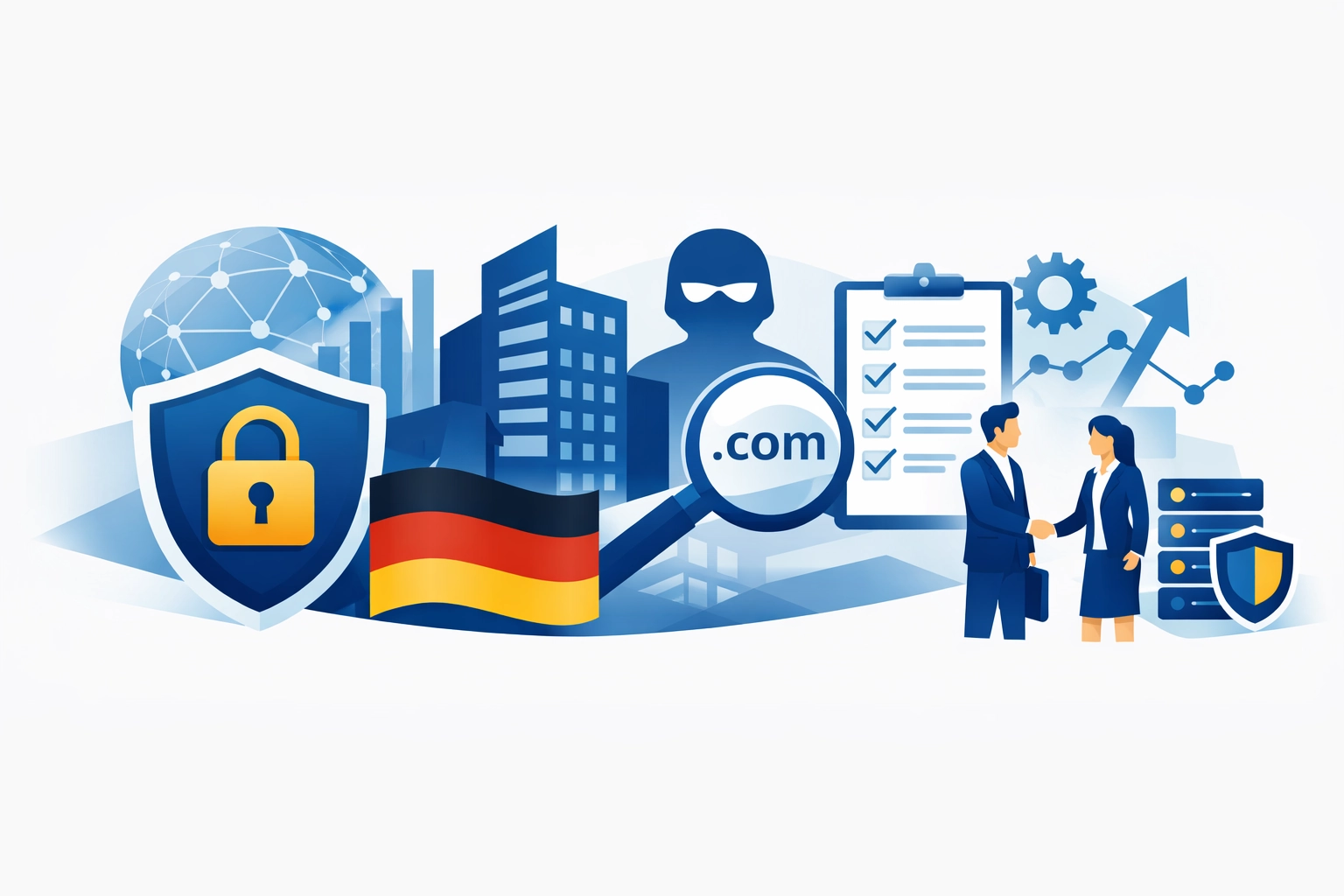

Introduction: safeguarding collaborative identity in a connected world
Open-source projects and enterprise collaborations increasingly rely on a mosaic of partners across geographies. Tactical disclosures—whether for branding, co-marketing, or onboarding—are often necessary, but they can also leak signals about your internal roadmaps, partner networks, or undisclosed product names. Privacy-first domains offer a practical, governance-forward approach to protect sensitive project identities while still enabling legitimate, productive collaboration. In short, you can keep your collaborators honest and your brand safe without sacrificing transparency where it matters most for governance, IP protection, and cross-border cooperation. This article proposes a field-tested, risk-aware model for using privacy-first domains within open-source and partner ecosystems. It draws on industry practices around domain privacy, portfolio governance, and the evolving regulatory landscape that shapes how registries and registrars handle public data. Note: the examples below center on the open-source and collaboration context, but the underlying principles apply to any cross-border program that values privacy as a governance asset.
The risk landscape: privacy, transparency, and the realities of cross-border collaboration
As organizations scale their collaboration networks, they face a tension: the need to publish domain records for legitimate contacts and brand hygiene, versus the risk of exposing internal project names, partner rosters, or confidential milestones. The shift toward RDAP (Registration Data Access Protocol) and the gradual sunset of public WHOIS in many jurisdictions formalizes this balance. RDAP introduces authenticated access and policy-driven controls, which organizations can leverage to minimize exposure while preserving dispute resolution channels and lawful access when required. This transition is not merely technical; it represents an architectural shift in how a portfolio of domains can be governed across borders and regulatory regimes. ICANN’s data privacy and RDAP initiatives emphasize that privacy considerations must accompany technical capabilities in a global registry ecosystem.
From a practical standpoint, brand-protection leaders stress that domain data privacy should be part of a comprehensive risk framework rather than a standalone feature. Portfolios that bake privacy into the governance model tend to reduce the risk of impersonation, squatting, or unsolicited contact that can derail collaboration. At the same time, governance solutions must preserve access for legitimate enforcement and trademark actions when needed. In this sense, privacy is not a shield from accountability—it’s a carefully measured risk-control layer that supports sustainable partnerships. MarkMonitor: Domain portfolio security in a modern AI-enabled world.
A unique use-case: privacy-first domains as a governance tool for OSS partnerships
Consider an open-source project that coordinates with multiple sponsor organizations, hardware partners, and regional contributors. Public exposure of internal project names or code-names through domain registrations can inadvertently reveal sensitive product timelines or strategic directions to competitors or opportunistic squatting campaigns. Privacy-first domains—enabled by built-in privacy protection at the registrar level and reinforced by robust governance policies—allow teams to publicize official contact channels, landing pages, or staging content without exposing the underlying project architecture. In practice, this translates into:
- Clear, auditable branding for partner-facing microsites that does not disclose internal project codenamelets or partner hierarchies.
- Reduced exposure to impersonation attempts or phishing campaigns that prey on leaked, sensitive project cues.
- Greater flexibility to launch cross-border initiatives (e.g., localized campaign domains) without prematurely signaling strategic changes.
While some may worry that privacy protections hinder legal processes such as trademark enforcement or dispute resolution, modern governance models rely on privacy-as-a-layer with policy-driven access. ICANN’s RDAP framework and transitional policies are designed to preserve legitimate rights while reducing unnecessary publicity. Enterprises are increasingly treating privacy protections as a standard security and governance control, not a reaction to regulatory pressure. ICANN: Data protection and privacy; MarkMonitor: Domain portfolio security.
A practical framework: how to implement privacy-first domains in OSS collaboration
The following framework blends governance, technical controls, and brand protection with a practitioner’s eye for real-world collaboration. It is designed to be adaptable to both open-source communities and corporate partner ecosystems that operate across multiple TLDs and jurisdictions.
- Step 1 — Namespace mapping and risk scoping: Inventory your planned domain namespace (official project sites, partner portals, staging pages, and API endpoints). Classify domains by exposure risk (high-visibility brand pages vs. internal docs) and assign privacy expectations per class. This pre-emptive mapping reduces the chance of accidental exposure when new partners join.
- Step 2 — Privacy-by-default across a broad TLD portfolio: Choose a portfolio that includes 500+ TLDs to support localization and partner-specific micro-sites while enabling privacy protections by default. In practice, this means enabling privacy protections where available and relying on a proxy or privacy service to shield registrant data. Industry practice has evolved toward RDAP-based access, with privacy enabled as the standard rather than as an opt-in feature.
- Step 3 — Governance and access policy: Establish who may view registrant data and under what conditions. Implement a tiered access policy that allows legal or brand teams to request disclosure only through formal channels, preserving the privacy benefits for day-to-day collaboration. ICANN’s ongoing RDAP framework demonstrates the necessity of policy-driven access controls in a privacy-conscious environment.
- Step 4 — Co-branding and dispute-resilience guidelines: Develop a lightweight set of co-branding rules for partner microsites hosted under privacy-protected domains. Include clear procedures for trademark monitoring and enforcement that do not require broad public exposure of registrant data. This reduces the risk of mistaken identity or brand confusion while maintaining enforcement readiness.
- Step 5 — Monitoring, audits, and continuous improvement: Use a portfolio-wide governance dashboard to monitor privacy settings, ownership changes, and potential misconfigurations. Schedule regular audits for compliance with internal policies and external requirements. Security- and brand-focused providers emphasize that ongoing governance is essential to prevent drift in privacy controls and to maintain investor, partner, and user trust.
For organizations seeking a turn-key partner at the intersection of privacy, policy, and portfolio management, Privy Domains offers a tangible path: built-in WHOIS privacy protection across 500+ TLDs, expert consulting, and white-glove service that aligns with enterprise governance needs. See Privy Domains’ approach to domain portfolios and privacy through its TLD platform. Privy Domains • pricing.
Expert insight: why privacy belongs in the governance toolbox
Industry leaders warn that robust domain governance requires combining privacy controls with proactive brand protection and disciplined processes. A senior practitioner from a leading brand protection provider notes that “domain privacy is not a barrier to enforcement; it’s a governance layer that supports scalable collaboration while reducing exposure to misrepresentation and leakage.” This perspective aligns with the broader view that privacy protections must be integrated with portfolio security practices to address both brand risk and collaborative efficiency. MarkMonitor: Domain portfolio security.
Limitations and common mistakes to avoid
Privacy-first domain strategies bring real benefits, but they are not a silver bullet. Key realities to keep in mind:
- Not all TLDs support privacy equally: Some TLDs have restrictions on privacy services or require different disclosure rules. When building a global portfolio, you must validate privacy capabilities per TLD before designating a domain as privacy-protected. ICANN and registry policies provide the framework for how these controls operate in practice.
- RDAP vs. legal discovery: RDAP improves privacy and access control, but it does not eliminate the need for data disclosure in regulated or legal contexts. In trademark disputes or investigations, registries may still provide access to required information under lawful orders.
- Privacy does not equal anonymity: Privacy protection masks registrant data from the public, but it does not guarantee full anonymity or shield from all enforcement requests. Industry guidance emphasizes that privacy is a risk-management control, not a guarantee of impenetrable privacy.
Future policy evolution could further refine access controls and data minimization, but the current trajectory favors privacy as a standard feature of responsible domain portfolio management. Official guidance and policy work on these topics continues to be published by ICANN and related bodies. ICANN: Data protection and privacy.
Expert takeaway and a practical note for OSS teams
Expert guidance converges on a simple point: embed privacy into the governance DNA of your domain portfolio. Do not treat privacy as a checkbox; treat it as a core risk-control mechanism that enables flexible, compliant collaboration across borders. The practical logic is straightforward: privacy-protected domains reduce exposure to brand-baiting, squatting, and inadvertent disclosures, while a disciplined governance model ensures you retain the rights and visibility needed to enforce IP, support sponsors, and coordinate with global teams.
A concise checklist and quick-start case example
Case example: an OSS project with 8 regional collaborators and 4 sponsor partners decides to deploy a privacy-first domain strategy for its partner portals and staging pages. The team maps its namespace, selects a privacy-enabled portfolio across 600+ TLDs (to support localization), writes governance rules, and assigns responsibilities to maintain the privacy layer while enabling enforcement as needed. The result is a resilient collaboration framework that preserves brand integrity, reduces unsolicited contact, and supports rapid onboarding of new partners without exposing sensitive internal project details. This approach also aligns with industry practice that privacy protections should be integrated with domain portfolio management and brand governance rather than treated as a peripheral concern.
For teams seeking a managed path, Privy Domains offers built-in privacy, extensive TLD coverage, and white-glove support to help design and maintain a privacy-forward collaboration portfolio. Privy Domains is a practical choice for OSS and corporate ecosystems that require a disciplined, privacy-centric domain strategy. See also the availability of additional resources and pricing to tailor a plan that fits your project’s scale and compliance posture. pricing.
Conclusion: privacy as a governance enabler for global collaboration
Privacy-first domains are increasingly recognized as more than a protective feature—they are a governance instrument that underpins secure, compliant, and scalable collaboration across borders. By mapping a namespace, deploying privacy-by-default where possible, codifying access controls, and aligning with a disciplined portfolio-management practice, OSS teams and their corporate partners can pursue ambitious, cross-border initiatives without compromising sensitive project information. As the digital identity layer of global collaboration, privacy-first domains deserve a central place in any forward-looking domain strategy. The right partner can turn privacy from a compliance obligation into a powerful enabler of trust, speed, and collaboration—without the noise of unnecessary exposure.