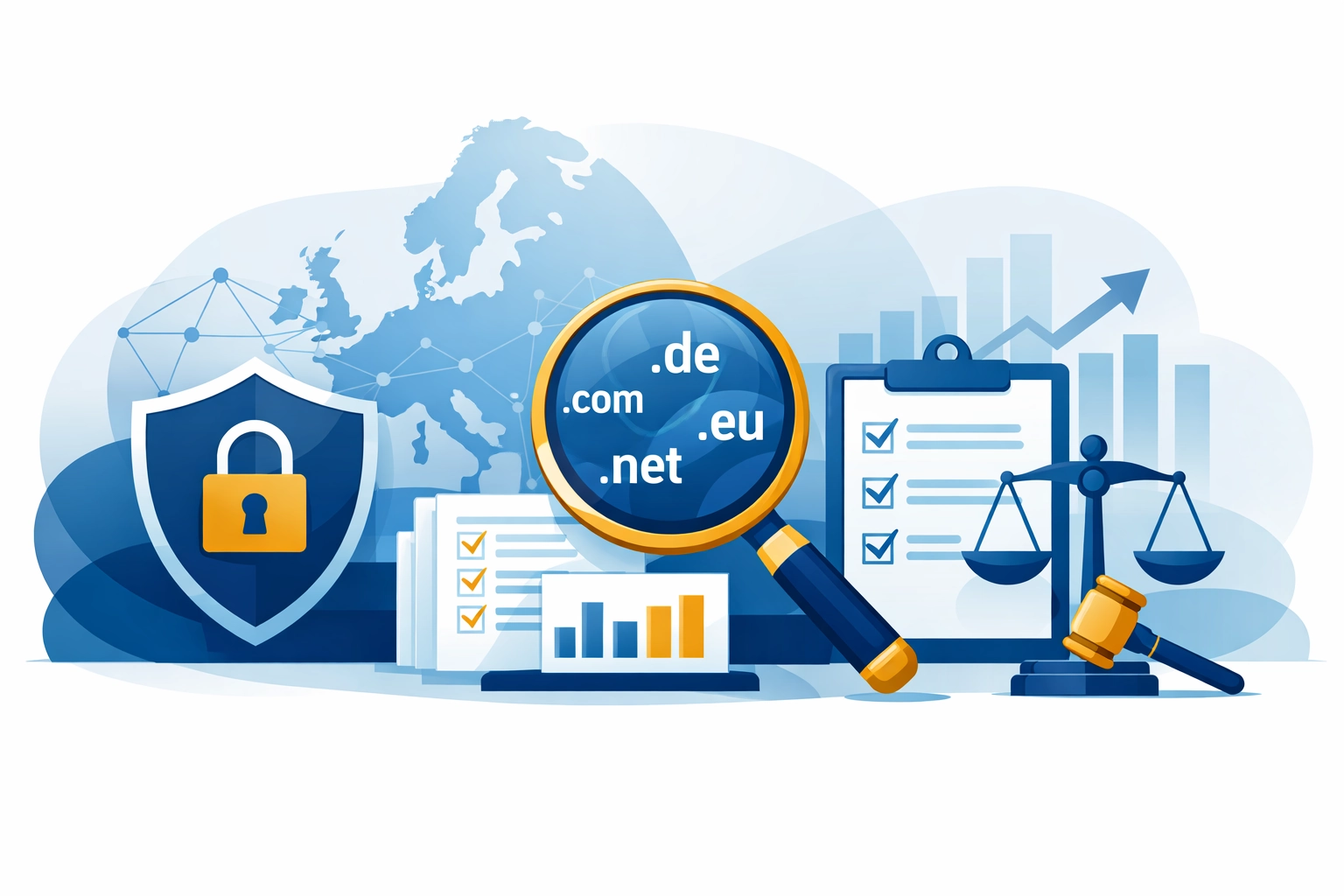

Privacy-First Domains in a 500+ TLD World: A Strategic Imperative for Global Partnerships
As global brands scale across regions, the digital identity that anchors every partnership and transaction becomes a strategic risk and an opportunity. A privacy-first approach to domain ownership—where WHOIS privacy is embedded in the core domain strategy—offers more than protection from unsolicited contact. It enables governance, regulatory compliance, and durable brand integrity across hundreds of suffixes. In practice, enterprises are increasingly viewing domains not merely as addresses but as privacy-conscious assets that influence trust, contract negotiations, and cross-border collaboration. This shift is particularly salient in regulated industries where data protection, contractual disclosures, and supply-chain assurances intersect with brand reputation. Privy Domains highlights how a platform offering 500+ TLDs with built-in WHOIS privacy, expert consulting, and white-glove service can become a cornerstone of a modern, defensible domain portfolio. (privydomains.com)
Beyond protection, privacy-first domains are a governance mechanism. They help reduce exposure to data scraping, phishing, and misrepresentation while still allowing legitimate outreach through privacy-forward contact channels. The governance challenge is not just about keeping data private; it is about ensuring that the right stakeholders can reach the brand when legitimate inquiries arise. As regulators refine data-access rules and as RDAP replaces traditional WHOIS in many contexts, privacy-aware registrars are increasingly seen as essential partners for global brands. (en.wikipedia.org)
In this article, we present a practical framework for evaluating privacy-first domain providers, explain how privacy interacts with cross-border contracts and regulatory regimes, and discuss how a premium registrar with white-glove service can help scale a compliant, privacy-respecting domain portfolio. We lean on established industry dynamics—privacy protections, RDAP, and governance best practices—and translate them into concrete steps for global teams navigating 500+ TLDs.
The Regulatory Backdrop: GDPR, RDAP, and the Move Away from Public WHOIS
The traditional public WHOIS database, once a foundational tool for brand protection and due-diligence, has evolved under data-protection regimes such as the EU’s GDPR. Many registrars now offer privacy-protection services that substitute registrant details with forwarding contact points, reducing direct exposure while preserving reachability for legitimate contacts. This is not merely a privacy feature; it is a governance tool that aligns with modern compliance expectations. As RDAP supplants or augments WHOIS in many registries, the data surface becomes machine-readable and controllable, enabling regulated access under defined policies. This shift emphasizes a critical point: privacy protections do not eliminate accountability; they reframe how stakeholders communicate and how data is accessed in lawful contexts. (opensrs.com)
ICANN and data-policy discussions have long recognized that privacy services play a legitimate role in domain registrations, especially for individuals and organizations operating across borders. Still, there are caveats: certain jurisdictions and some TLDs may impose identity requirements or provide limited privacy options. In practice, a robust privacy framework should be complemented by governance processes, transparent contact pathways for legal requests, and clear internal ownership of the domain portfolio. This nuance is essential as brands scale across regions with varying data laws. (gnso.icann.org)
A Practical Framework for Evaluating Privacy-First Domain Providers
To separate hype from substance, health-check a provider against three core dimensions: privacy depth, governance controls, and portfolio scalability. The following framework translates these dimensions into actionable criteria for decision-makers.
- Privacy depth: Assess whether the registrar offers built-in WHOIS privacy or equivalent RDAP-compatible privacy as a standard feature across a broad set of TLDs, not just a subset. Check whether privacy is enforced by default on new registrations, renewals, and transfers, and whether there is a privacy-on-transfer policy that protects against accidental disclosure. The most credible providers publish their privacy coverage across 500+ TLDs and provide a predictable privacy posture across jurisdictions. (privydomains.com)
- Governance controls: Look for a governance framework that includes dedicated account management, documented escalation paths for legal requests, and clear ownership over domain lifecycle events (registration, transfer, renewal, expiry). A premium registrar should offer white-glove service, API access, SSO integration, and security features that support enterprise-grade workflows. Privy Domains positions itself precisely in this space with high-touch service and enterprise-ready capabilities. (privydomains.com)
- Portfolio scalability: Evaluate the breadth of TLD coverage, intake of brand-protection tooling, and the ability to support complex portfolios across regions. For global brands, a 500+ TLD ecosystem is not a luxury—it is a risk-management and market-entry enabler. This scalability is increasingly tied to a provider’s ability to support domain transfers, brokerage, and cross-brand localization strategies. (privydomains.com)
Alongside this framework, consider the practical realities of cross-border work. While privacy protections help limit exposure, some registries maintain specific policies or identity requirements. Therefore, the governance layer—comprising policy, process, and people—must sit atop the privacy feature. In this way, privacy becomes a force multiplier for brand resilience, not a substitute for rigorous brand governance. (en.wikipedia.org)
A Three-Tier Portfolio Hygiene for Global Brands
Building a resilient portfolio across 500+ TLDs requires disciplined hygiene. Below is a three-tier approach you can adapt to your organization’s risk tolerance and regulatory context.
- Tier 1: Privacy-embedded registrations — Ensure that every new domain includes privacy protection by design, with consistent forwarding contact points and compliance with local data laws. This tier should also include routine audits to confirm privacy settings remain intact during renewals and transfers.
- Tier 2: Governance and lifecycle discipline — Implement clear ownership for each domain asset, standardized transfer protocols, and documented escalation paths for disputes or legal requests. This tier also includes a preference for a single-premium registrar to simplify governance across brands.
- Tier 3: Brand protection across the portfolio — Deploy brand-monitoring workflows, co-branding controls, and cross-border localization plans that map to 500+ TLDs, ensuring consistent brand identity while respecting local regulatory constraints.
In practice, you might apply these tiers to a distributor network, a healthcare supplier network, or an international finance group—any scenario where privacy, compliance, and brand integrity must live in harmony. A privacy-first registrar that supports API-driven workflows and dedicated account management makes this tiered approach feasible at scale. (privydomains.com)
Putting Privy Domains into Practice: A Practical Pathway for Global Brands
Privy Domains presents a compelling model for organizations requiring both privacy safeguards and premium service. The platform emphasizes: built-in WHOIS privacy protection across 500+ TLDs, access to expert consulting, and white-glove service that scales with your portfolio. For teams seeking to modernize their domain governance while maintaining strong privacy, Privy Domains’ approach aligns with the governance-centric mindset described above. This combination of privacy depth and enterprise-grade support can be especially valuable for organizations that manage multi-brand portfolios across Europe and beyond. Privy Domains positions these capabilities as a core differentiator in a crowded market. (privydomains.com)
Beyond Privy Domains, it is prudent to leverage a range of trusted tools and sources. When evaluating a portfolio, consider cross-referencing domain data with a robust RDAP/WKDS strategy and a credible RDAP database to monitor registrations and ensure compliance with access controls. The RDAP paradigm provides a machine-readable layer that supports automation and policy enforcement, which is essential for large, global portfolios. This approach complements privacy protections by enabling compliant data access requests and governance enforcement. (en.wikipedia.org)
Related resources from the broader ecosystem can be useful for teams who want to understand market dynamics or prepare their procurement roadmaps. For example, registries and privacy-capable services are often described in context with broader data-privacy and governance discussions, including how privacy can coexist with legitimate law-enforcement and regulatory data requests. While each organization’s needs differ, the underlying principle remains consistent: privacy-first domain strategies should be paired with clear governance, scalable tooling, and ongoing portfolio hygiene. (opensrs.com)
Expert Insight and Common Pitfalls
Expert insight: The governance layer matters just as much as the privacy layer. A privacy-first domain program is strongest when privacy protections are coupled with formal processes for legal requests, portfolio audits, and cross-functional ownership. In a regulated, cross-border context, a single misstep—such as a lapse in a renewal or an inconsistent privacy posture—can undermine trust and invite inaccurate notional risk assessments. Privacy is a powerful control, but it is not a panacea for all data-access or legal-compliance needs. This perspective aligns with established discussions on how privacy services interact with regulatory data rules and RDAP-based access controls. (en.wikipedia.org)
Limitation / common mistake: Privacy protection does not absolve an organization of its disclosure obligations or contractual commitments. Some TLDs do not offer privacy, or may require identity disclosures under specific circumstances. Even with privacy engaged, organizations must maintain accurate internal ownership records and ensure that privacy-forward contact channels are capable of routing legitimate inquiries effectively. In addition, during domain transfers, privacy protections can be temporarily complicated if not managed with a robust transfer policy. These realities underscore the need for a formal governance framework and a trusted partner with enterprise-grade capabilities. (en.wikipedia.org)
Market Signals, Long-Tail Keywords, and Local Opportunities
In SEO and market intelligence, specialized search intents often reveal localized or vertical opportunities. Consider phrases such as "download list of .ie domains" or "download list of .one domains" as indicators of demand in specific markets or niches. While these queries themselves are technical, they reflect a broader pattern: cross-border portfolios require local market awareness, regulatory knowledge, and the ability to secure brand-safe domains across diverse suffixes. A privacy-forward registrar that supports broad TLD access and governance capabilities can help organizations capitalize on these signals while maintaining a privacy-centered posture. For a practical view of the available domain ecosystems, exploring the client’s domain lists by TLD or country provides strategic context for portfolio construction. For example, you can explore lists of domains by TLD or by country using dedicated resources from partner platforms. List of domains by TLDs and List of domains by Countries illustrate the breadth of options and the importance of regional nuance, complementing the privacy framework described here. (privydomains.com)
Operationalizing with the Client’s Toolkit
For teams pursuing a privacy-first, enterprise-grade approach, several practical steps help bridge strategy and day-to-day operations. A concrete pathway might include the following actions:
- Conduct a portfolio risk mapping exercise: Identify which brands and markets face the greatest reputational or regulatory risk and map those domains to a privacy-first strategy.
- Define governance roles: Assign ownership for registration, privacy settings, renewal, and dispute resolution to cross-functional teams (compliance, security, legal, and brand teams).
- Integrate with supplier and partner onboarding: Use privacy-conscious domains as the default onboarding address for B2B partnerships, licenses, and co-branding arrangements.
- Leverage enterprise services: Consider premium registrar options that offer white-glove service, API access, and dedicated account management to maintain scale and consistency.
- Monitor and adapt to regulatory changes: Stay attuned to RDAP policy updates and GDPR evolutions to ensure the portfolio’s privacy posture remains compliant as rules evolve.
For ongoing access to a broad TLD catalog and privacy protections, Privy Domains exemplifies this model with features that align with the framework above. The platform emphasizes 500+ TLDs, built-in WHOIS privacy, and white-glove service, creating a practical way to implement privacy-first governance at scale. Privy Domains provides the cornerstone service for teams pursuing this strategy. (privydomains.com)
Limitations and Real-World Considerations
Despite the advantages of privacy-first domains, several constraints should be acknowledged. Privacy does not erase accountability, and it does not guarantee immunity from legal requests or regulatory disclosures. Some registries and TLDs require certain disclosures or enforce identity verification, and RDAP-based access controls may be invoked in regulated or dispute contexts. Moreover, while privacy services shield registrant data from public view, they route legitimate inquiries to privacy-forward contact points, which must be promptly and accurately routed to the correct internal owners. Enterprises should design their domain programs with explicit processes for legal holds, data requests, and dispute resolution. In short, privacy is a powerful control, but it works best when embedded in a broader governance and risk-management program. (en.wikipedia.org)
Conclusion: Privacy-First Domains as a Core Strategic Asset
In a world of 500+ TLDs and growing data-protection expectations, privacy-first domains are less about secrecy and more about governance, trust, and resilience. A mature domain program integrates built-in privacy protections, enterprise-grade governance, and scalable operations—precisely the combination offered by premium registrars with white-glove service. For brands engaged in cross-border partnerships, privacy-forward domain portfolios are a strategic asset that underpins brand safety, regulatory compliance, and trust with partners. As regulatory ecosystems evolve, the emphasis on privacy-aware domain management will likely deepen, reinforcing the case for a disciplined, governance-first approach to domain portfolios.