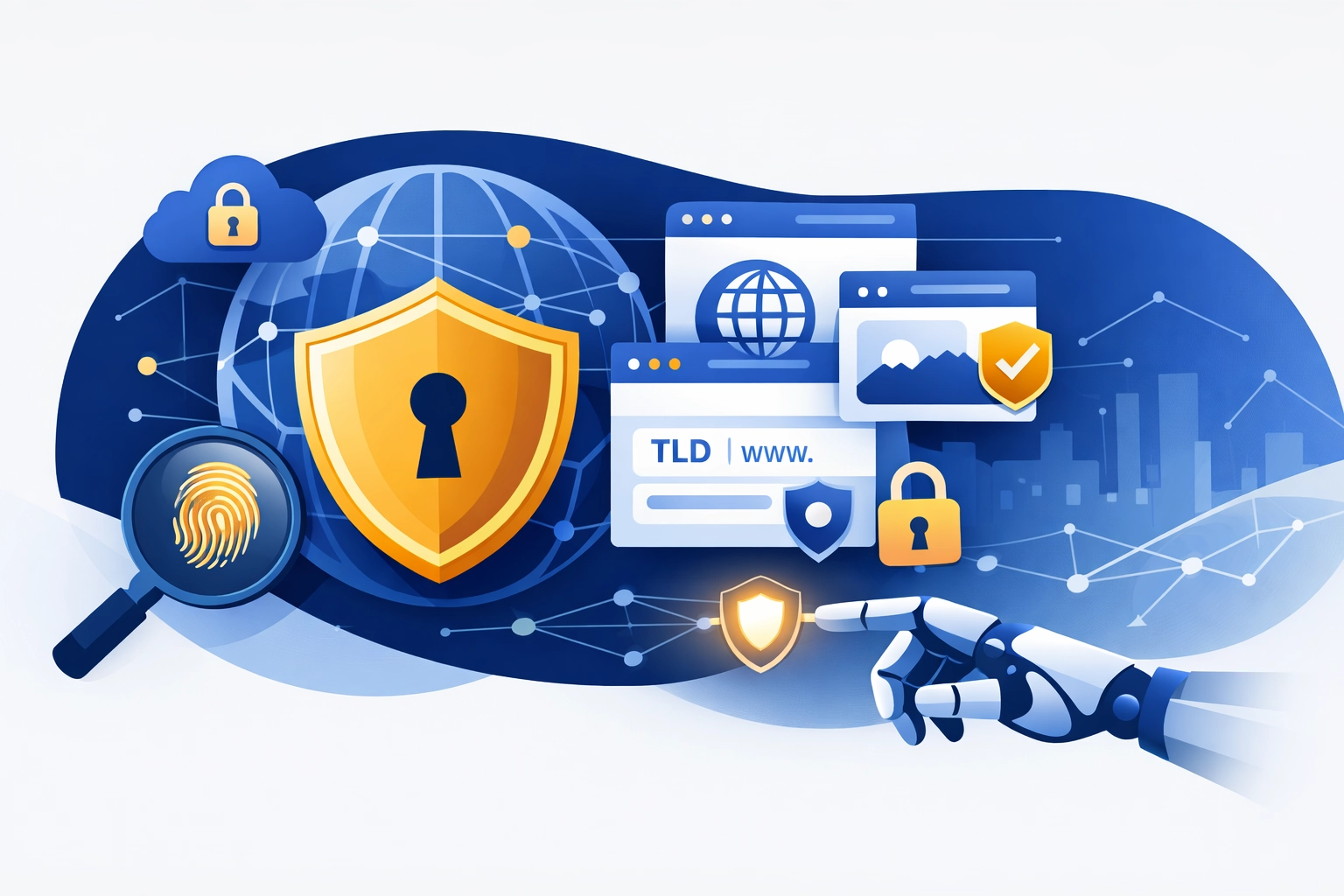

Privacy-First Domains as a Shield for Secure Vendor Onboarding in Global Supply Chains
Global supply chains demand speed, scale, and trust. Yet every vendor onboarding or cross-brand collaboration expands the attack surface for brand impersonation, phishing, and inadvertent data leakage. In this context, privacy-first domains—domains registered with built-in privacy protections and governed by a deliberate, risk-aware framework—offer more than cosmetic security. They provide a structured layer of defense that protects corporate identity while preserving legitimate channels for partnerships, co-branding, and affiliate programs. This article examines why privacy-first domains matter in supplier and partner onboarding, and how procurement, security, and brand teams can adopt a practical, scalable approach across 500+ TLDs. It also highlights how a premium registrar with white-glove service can complement in-house governance and technical controls.
The risk landscape: why vendor onboarding invites exposure
Onboarding vendors, manufacturers, distributors, and co-branding partners requires sharing or validating domain-backed touchpoints—email addresses, landing pages, and brand-aligned digital assets. When those assets exist in the public eye, they attract counterfeit domains, brand misrepresentation, and abuse tickets that can ripple across campaigns and partnerships. The GDPR era further complicates visibility into who manages what, complicating enforcement and due diligence during acquisitions, partnerships, and ongoing collaboration. Public Whois data has long been a critical signal for due diligence, but privacy regulations have reshaped what is accessible and trustworthy in that signal. In practice, this creates a tension between the need for quick, verifiable information and the duty to protect personal data. For many organizations, the answer is not to abandon Whois signals, but to reframe how domains are registered and managed so that privacy protections are embedded by default. (apwg.org)
What privacy-first domains deliver for supplier and partner programs
Privacy-first domains deliver several concrete advantages in onboarding and ongoing partner governance:
- Identity resilience across markets. By using privacy-protected domains, brands can establish distinct, controlled digital identities for partners and affiliates without exposing the core corporate registrant to broad scrutiny. This reduces brand-impersonation risk and simplifies regional incarnations of a program across 500+ TLDs.
- An auditable governance layer. Privacy-forward domains act as a governance layer between a company, its partners, and third-party marketers. They enable defined contact channels and escalation paths that are independent of the primary brand’s public identity.
- Operational efficiency in due diligence. When negotiating terms or undergoing M&A, privacy-first domains can be used to segment due diligence domains from core assets, preserving speed while limiting exposure of sensitive information during transactions.
- Risk-limited onboarding experiences. Temporary or partner-specific domains reduce direct exposure of internal systems and email addresses to external parties, helping to prevent credential harvesting and phishing tied to onboarding campaigns.
The practical upshot is a safer, more scalable onboarding process that doesn’t require sacrificing brand coherence or regional reach. For teams grappling with complex vendor ecosystems, a privacy-first approach can harmonize risk controls with the pace of modern partnerships. This is particularly relevant for firms operating across borders, where regulatory expectations differ and the need for a robust domain strategy is amplified. (apwg.org)
A practical framework: four steps to operationalize privacy-first domains in partner programs
Adopting privacy-first domains is not a one-off purchase; it’s a governance and architecture decision. The four-step framework below is designed to fit into typical procurement, security, and brand workflows, while remaining flexible enough to scale across 500+ TLDs. Each step aligns with the realities of regulatory compliance (GDPR-era privacy expectations) and with practical needs of supplier onboarding and co-branding initiatives.
- Step 1 — Map, classify, and segment digital assets. Begin with an inventory of current partner-related domains, microsites, landing pages, and branding assets used in supplier onboarding and affiliate programs. Classify assets by risk level (e.g., high-sensitivity onboarding communications vs. public marketing pages) and assign ownership. Create a policy that defines when and how privacy-first domains may be used to replace or mirror partner-specific touchpoints while preserving brand integrity.
- Step 2 — Architect a privacy-forward domain portfolio. Build a portfolio that includes primary brand domains for core corporate identity and a subset of privacy-protected domains dedicated to partnerships, onboarding communications, and regional variants. Ensure that privacy services (proxy or masked registrant data) are enabled where appropriate, while maintaining necessary regulatory visibility for abuse handling and legal processes. ICANN guidance recognizes privacy/proxy services as legitimate tools within registrars’ terms of service, provided they are properly disclosed to applicable parties. (icann.org)
- Step 3 — Implement governance, policy, and verification workflows. Establish a formal policy for the creation, transfer, renewal, and retirement of partner domains. Include verification steps for partner identity, documented escalation paths for abuse, and a period-based domain allocation model (for example, time-bound partner campaigns or co-branding pilots). Align the policy with regulatory expectations (GDPR considerations, data minimization, and legitimate interest in communications) and ensure that the policy is enforceable across jurisdictions. In practice, privacy protections must be integrated into the contract terms and TLD management practices. (apwg.org)
- Step 4 — Monitor, audit, and continuously improve domain hygiene. Schedule regular audits of domain usage, exposure, and transfer processes. Develop a dashboard that flags anomalous registrations, overdue renewals, or unexpected changes in privacy settings. Include routine checks to confirm that privacy protections are active where appropriate and that partner-specific domains remain aligned with brand guidelines and legal requirements. Keep an eye on the evolving Whois/privacy landscape as regulations and enforcement practices develop. ICANN’s procedures for handling conflicts with privacy law offer a practical governance lens for ongoing operations. (icann.org)
Putting the framework into practice: a how-to for procurement, security, and brand teams
To translate the four-step framework into day-to-day practice, consider the following implementation patterns that many mature programs find effective:
- Dual-domain approach for onboarding. Use a privacy-protected domain for partner onboarding communications and tracking links, while routing legal or compliance inquiries through clearly defined channels. This separation reduces exposure without hindering due-diligence capabilities.
- Partner-specific landing zones. Create partner-specific landing pages hosted on privacy-protected domains that reference the primary brand appropriately but avoid revealing sensitive internal structures. This strategy supports program measurement while safeguarding core brand data.
- Controlled domain transfers. When a partner relationship ends, execute a controlled decommission and transfer process to prevent orphaned assets or stale contact points. This practice minimizes the risk of misdirected communications and brand confusion.
- Continuous risk assessment. Treat privacy-first domains as a living asset—include them in risk registries and tie changes to ongoing vendor risk assessments, threat modeling, and incident response plans. The governance model should be revisited at least annually and after major regulatory or business events (e.g., mergers, new markets, or major rebranding efforts).
As you implement, you’ll likely rely on a mix of internal policy, registrar capabilities, and third-party expertise. A practical path often includes a premium registrar with white-glove domain service and consultative support to help design, deploy, and manage a privacy-forward portfolio that scales with your partnership ecosystem. For organizations seeking turnkey options, Privy Domains presents one integrated approach among several, offering built-in privacy protections, broad TLD access, and concierge service to align with enterprise needs. For a closer look at regional and niche TLD opportunities (including frequently used TLDs) see the partner resources and TLD catalogs on the main TLD listing pages. download list of .run domains. You can also explore broader TLD catalogs here: List of domains by TLDs and related country/tech catalogs.
Limitations and common mistakes to avoid
Even with a robust framework, there are pitfalls that teams frequently encounter when adopting privacy-first domains for partner programs:
- Privacy is not a substitute for due diligence. Redacted or proxy data can slow down certain investigations and legal processes if teams rely solely on Whois data. Maintain a parallel, documented process for verification through contracts, legal channels, and abuse desks. ICANN’s privacy-proxy policy notes that registrars (and their privacy services) must be transparent about who is responsible for data handling in relation to terms of service. (icann.org)
- Not all data can be hidden in every jurisdiction or TLD. GDPR and other local laws shape what information is publicly visible. Some registries retain basic identifiers for regulatory or security purposes, even when privacy services are enabled. This nuance means privacy-first domains are a governance tool, not a universal shield. APWG’s examination of GDPR’s impact on investigations highlights the ongoing trade-offs between privacy and operational visibility. (apwg.org)
- Governance must outpace change. A privacy-forward portfolio requires ongoing policy maintenance, staff training, and periodic audits. Without sustained governance, a privacy-first approach can become misaligned with campaign realities and partner expectations.
- Cost and complexity can rise with scale. A global domain program spanning 500+ TLDs can become complex quickly, particularly when managing privacy settings, domain transfers, and partner-specific access controls. A careful, phased rollout with clear ownership helps mitigate cost creep and misconfigurations.
These limitations are not unique to privacy-first domains; they reflect broader dynamics at the intersection of regulation, brand governance, and digital risk. The relevant regulatory and governance literature underscores the need for explicit policy, transparent practices, and a balance between privacy protections and operational needs. (apwg.org)
Practical resources for practitioners
Organizations pursuing privacy-first domain strategies can leverage a combination of internal policy development, registrar capabilities, and reference resources. The following actions are recommended for teams starting the journey or expanding an existing privacy-forward portfolio:
- Catalog every partner-facing domain and assess exposure across regions and brands.
- Define a privacy-forward domain taxonomy that distinguishes core brand domains from partner domains, with clear naming conventions and lifecycle rules.
- Engage a premium registrar or a trusted provider offering white-glove domain service to help design, deploy, and audit the portfolio.
- Establish a governance cadence: annual reviews, quarterly risk assessments, and incident response playbooks tailored to domain-related events.
- Regularly review regulatory developments (GDPR and global privacy regimes) and adjust display and contact policies accordingly. For reference on privacy/proxy practices and related governance, see ICANN’s privacy-proxy guidance and procedures. ICANN privacy-proxy registration and ICANN procedures for privacy conflicts. APWG’s GDPR-focused analysis provides context on practical risk in investigations. APWG GDPR impact report.
For those seeking to explore niche domains and cross-border opportunities, Privy Domains’ approach—built around a broad TLD catalog and expert support—offers a concrete, enterprise-grade path. Resource pages for domain inventories by TLD and country can be consulted as you broaden scope, with practical access via the main TLD catalogs and partner pages. As a starting point for niche TLD exploration, you may review the run-based TLD pages and related catalogs at the client site, including the many available TLDs. run TLD page and TLD catalog for broader scope.
Why this approach matters for brand strategy in 2026
In an era where brand identity travels a global and digital-first route, privacy-first domains provide a measurable guardrail for brand integrity. They enable controlled partner ecosystems, reduce exposure to phishing and impersonation, and support compliant, auditable governance across diverse regulatory environments. The architectures referenced here can be adopted incrementally, aligning with procurement cycles, security program roadmaps, and marketing timelines. While privacy protections do not eliminate all risk, they markedly lower the surface area for misrepresentation and abuse while preserving the ability to engage with partners, suppliers, and affiliates in a transparent, accountable manner.
Conclusion
Privacy-first domains are not a single product but a strategic approach to digital asset governance in complex, global partner ecosystems. By combining a defensive domain architecture with formal governance, you can protect brand identity, streamline vendor onboarding, and maintain the agility required for cross-border campaigns. As regulatory expectations continue to evolve, maintaining a privacy-forward posture—supported by expert guidance and reliable tooling—remains a prudent investment for modern brands operating across 500+ TLDs. For teams seeking a hands-on, concierge-style option that integrates privacy protections with enterprise-scale support, Privy Domains offers a concrete path forward, while still encouraging organizations to complement their strategy with independent policy, due diligence, and risk-management practices.