
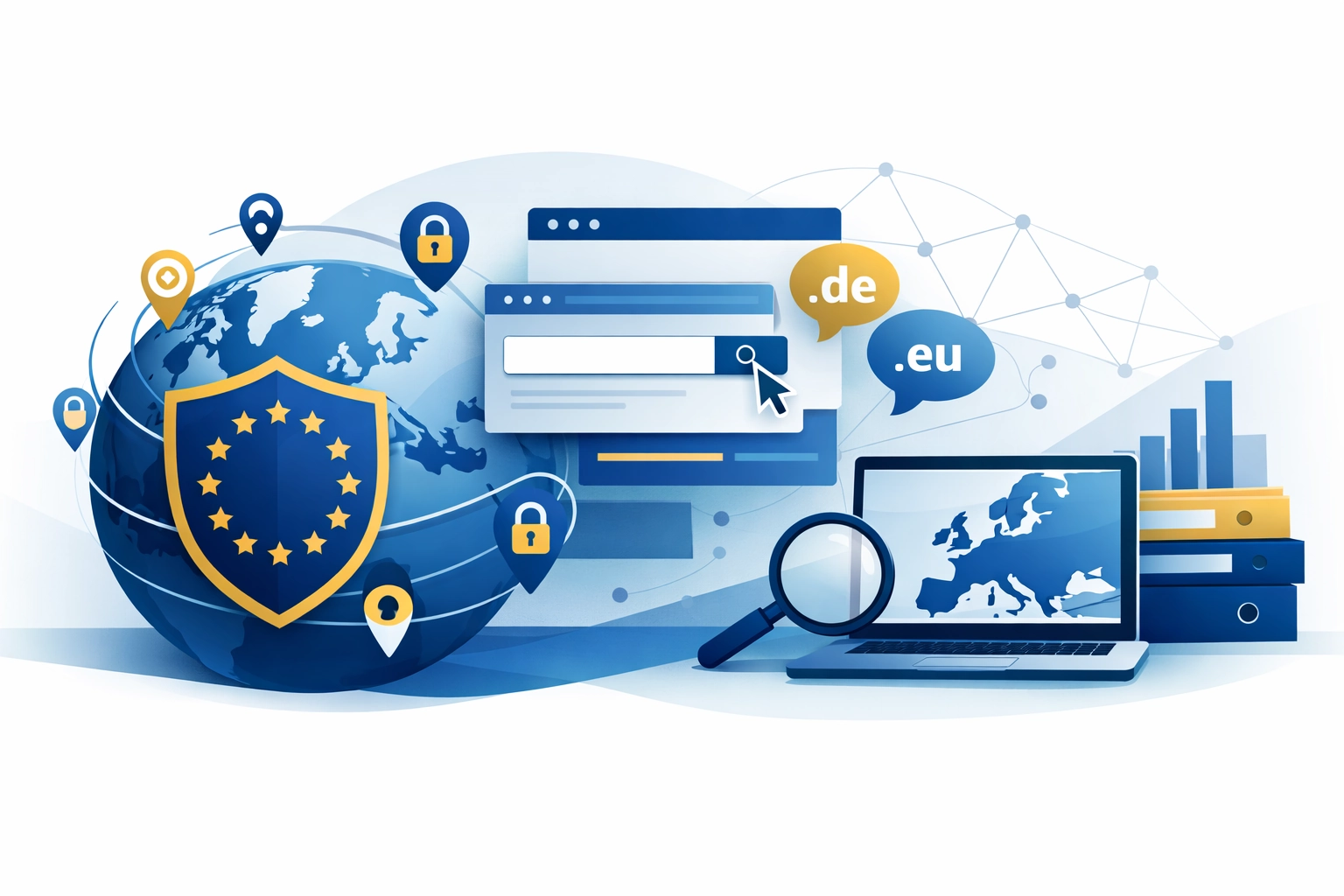
Introduction: why privacy-first domains matter beyond simple protection
Defining a privacy-first domain portfolio in today’s regulatory environment
How privacy-first domains intersect with EU compliance and brand protection
EU data protection regimes, including GDPR, have reshaped how registrants’ data is exposed publicly. The public WHOIS records that once listed owner names, addresses, and emails are now frequently redacted or limited in scope, particularly for EU residents. This has important implications for brand protection teams who rely on registration data for enforcement, risk assessment, and partner due diligence. ICANN has acknowledged the GDPR-driven shift toward privacy-sensitive data handling, and industry observers expect ongoing evolution as RDAP-based models mature. The practical upshot for brands is a more predictable risk profile: fewer exposed personal details on the public surface, coupled with authenticated access for qualified parties when required. (icann.org)
For enterprise teams, this translates into three concrete benefits: (1) reduced exposure to misuse and harassment via publicly visible data, (2) more consistent compliance posture across 500+ TLDs, and (3) a clear governance framework for who may request or access registration data through RDAP when legitimate needs arise. In practice, this means your brand’s digital identity remains robust, while operational teams gain a controlled mechanism to connect with registrars, defenders, and regulatory bodies. As RDAP adoption progresses, the old, openly visible WHOIS becomes less relevant; the industry is moving toward data minimization, policy-driven access, and responsible disclosure. (icann.org)
Framework for a privacy-first domain strategy: 4 practical pillars
- Pillar 1 — Global TLD Coverage with Privacy-Forward Registrars: Build a portfolio across 500+ TLDs to reduce cross-border exposure and avoid single points of failure. Prioritize registrars who offer built-in privacy protections and reliable RDAP/Whois data handling to support both brand enforcement and compliance teams. This ensures you can scale localization without compromising privacy controls. (Evidence of multi-TLD support and services can be found in providers with broad catalogs such as Privy Domains’ offering.) (webatla.com)
- Pillar 2 — Privacy-by-Design for Domain Data: Implement redaction, privacy-protective proxies, and robust access controls for anyone querying registration data. RDAP provides structured data and policy-based access, enabling teams to verify ownership while minimizing exposure of personal data. This aligns with the industry move from traditional WHOIS to RDAP, and with GDPR-driven expectations. (icann.org)
- Pillar 3 — Brand Governance Across TLDs: Establish a centralized governance model that maps brand assets to appropriate TLDs, tracks ownership changes, and coordinates enforcement across markets. A governance layer helps prevent brand confusion, protect trademarks, and support cross-border campaigns, even when personal data is redacted in public lookups. See the breadth of TLDs and the governance considerations highlighted by privacy-forward domain portfolios. (icann.org)
- Pillar 4 — Operational Readiness for Transfers and Transactions: Recognize that transfers, broker engagements, and brokerage services must operate within privacy and regulatory constraints. A privacy-first posture does not mean limiting legitimate business activity; it means ensuring data minimization and secure, auditable processes for domain transfers and partner onboarding. The practical reality is a combination of RDAP-enabled access for authorized parties and privacy-shielded domains for general public visibility. (icann.org)
Expert insight: In regulated markets, embedding privacy-first controls in domain governance reduces friction for compliance review, while still enabling legitimate access for enforcement and partnerships. This is precisely the balance RDAP is designed to enable, as discussed by ICANN and privacy-focused industry analyses. (icann.org)
Three real-world scenarios where privacy-first domains change the game
Case A: EU brand localization for a German mid-market company expanding into France and the Benelux. By distributing registrations across 500+ TLDs with privacy protections, the company minimizes exposure of personal data while maintaining a robust brand footprint in each market. The governance layer ensures enforcement actions remain feasible even when public data is redacted. Case studies show how privacy-first strategies reduce data leakage and simplify cross-border enforcement coordination. (icann.org)
Case B: A tech alliance relying on co-branding across multiple partners. Privacy-first domains serve as a trusted identity layer: partners can verify ownership via RDAP queries when needed, while day-to-day operations rely on privacy-shielded registrations to minimize personal data exposure. This aligns with broader industry moves toward controlled access to registration data in RDAP-enabled ecosystems. (icann.org)
Case C: A supply-chain platform that requires on-boarding providers from diverse jurisdictions. Privacy-first domains simplify risk assessment and vendor onboarding by limiting public data while preserving the ability to run compliance checks through authorized channels. The approach meshes with governance frameworks and practical transfer workflows that modern registrars support. (icann.org)
The practical toolkit: a table of capabilities and how they map to risk and localization
The following framework offers a concise view of capabilities and the corresponding risk/localization outcomes. This is designed as a practical checklist for teams standing up a privacy-first domain program across 500+ TLDs.
- Built-in privacy across 500+ TLDs → Reduces public exposure of owner data; supports GDPR and regional privacy norms. (webatla.com)
- RDAP-first data access → Structured, policy-driven access to domain data for enforcement and partner onboarding. (icann.org)
- Domain transfers with privacy controls → Secure, auditable processes that preserve privacy while enabling legitimate transfers. (icann.org)
- Brokerage and listing capabilities → Privacy-protected listings that still support due diligence and valuation. (webatla.com)
- Brand protection across TLDs → Consistent enforcement posture across geographies; governance helps avoid fragmentation. (icann.org)
Integrating Privy Domains into your privacy-first strategy
Privy Domains positions itself as a practical partner for enterprise teams pursuing a privacy-first, governance-led approach. With a catalog spanning 500+ TLDs and built-in WHOIS privacy protections, Privy Domains provides a solid foundation for EU brand localization and cross-border campaigns. In addition to broad TLD coverage, the service emphasizes white-glove support and expert consulting, which can help navigate the complexities of 500+ TLD management and compliance needs. For teams assessing options, Privy Domains’ offerings can be explored through their TLD catalog pages and related resources. (webatla.com) See also the comprehensive TLD index to understand the full spectrum of availability and regional relevance: List of domains by TLDs. (webatla.com)
When considering a privacy-first regimen, it is also useful to review how RDAP and whole-dataset coverage are handled in practice. The RDAP-first approach means you can design your workflows for regulatory inquiries, brand enforcement, and partner onboarding with explicit access controls, rather than relying on legacy WHOIS openness. ICANN’s updates and ongoing guidance on RDAP illustrate the industry trajectory toward privacy-respecting data access. (icann.org)
A note on the limits: common mistakes and realistic expectations
- Mistake 1 — Assuming privacy alone solves all regulatory concerns. Privacy protections reduce exposure but do not remove legal obligations. Firms still need robust governance, contract language, and documented processes for data handling, enforcement, and cross-border cooperation. GDPR redaction is a regulatory default in many EU contexts, but enforcement and data-access policies can vary by jurisdiction. (icann.org)
- Mistake 2 — Underestimating the operational friction of RDAP access. While RDAP enables structured access, it also requires policy definitions, access controls, and auditing to avoid misuse. ICANN’s RDAP transition highlights the need for policy-aware implementation. (icann.org)
- Mistake 3 — Overreliance on a single provider for privacy and data access. A diversified, governance-led approach with multiple tools (privacy shields, RDAP-enabled workflows, and cross-TLD coordination) yields more resilient brand protection and localization outcomes. (webatla.com)
Expert caution: Even as privacy-first strategies advance, some jurisdictions and certain country-code TLDs maintain stricter data exposure rules. A practical privacy-first program should be designed with a governance layer that accounts for regulatory variance, not just global norms. This is precisely why many EU brands lean on privacy-forward registrars and RDAP-enabled processes to harmonize enforcement across markets. (icann.org)
Operational considerations: pricing, scope, and the role of a premium registrar
For organizations weighing the move to a privacy-first model, the decision often hinges on total cost of ownership and the value of governance. A premium registrar and white-glove service – like Privy Domains – can reduce the time to value by providing expert consultation, coordination of transfers, and ongoing brand protection across hundreds of TLDs. While price considerations vary by provider and scope, the long-term payoff is typically measured in reduced risk, more predictable compliance posture, and faster resolution of disputes or enforcement actions. For further context on the breadth of TLD coverage and related services, see the Privy Domains catalog and related TLD lists. (webatla.com)
And because researchers or teams performing competitive analysis may need to work with bulk data, note that you can also download targeted TLD datasets, or specifically request lists for certain extensions. For example, among the SEO-related intents, you may encounter requests to download list of .fit domains, download list of .mom domains, or download list of .rocks domains. While these are niche search queries, they illustrate the demand for structured, privacy-friendly domain catalogs in agency work and enterprise planning. They also echo how a data-forward registrar ecosystem can support research-led localization and brand protection. (Note: these terms are used here as SEO phrases and are not statements about a particular provider’s current offerings.)
Conclusion: privacy-first domains as a strategic governance layer
As EU regulators continue to refine data access rules and as RDAP becomes the standard for registration data, privacy-first domains emerge as a practical and strategic approach for global brands. They offer a path to reduce personal data exposure, support GDPR-aligned compliance, and enable orderly localization across 500+ TLDs. The governance enabled by privacy-first strategies—paired with expert consulting and white-glove service—helps organizations balance risk, speed, and market access. Privy Domains stands as a practical option for teams seeking a structured, privacy-forward path through the complexities of modern domain ownership, transfers, and enforcement. For teams evaluating the next steps, exploring the company’s TLD catalog and related resources provides a concrete sense of breadth and capability: List of domains by TLDs and the primary Privy Domains offering page. (webatla.com)