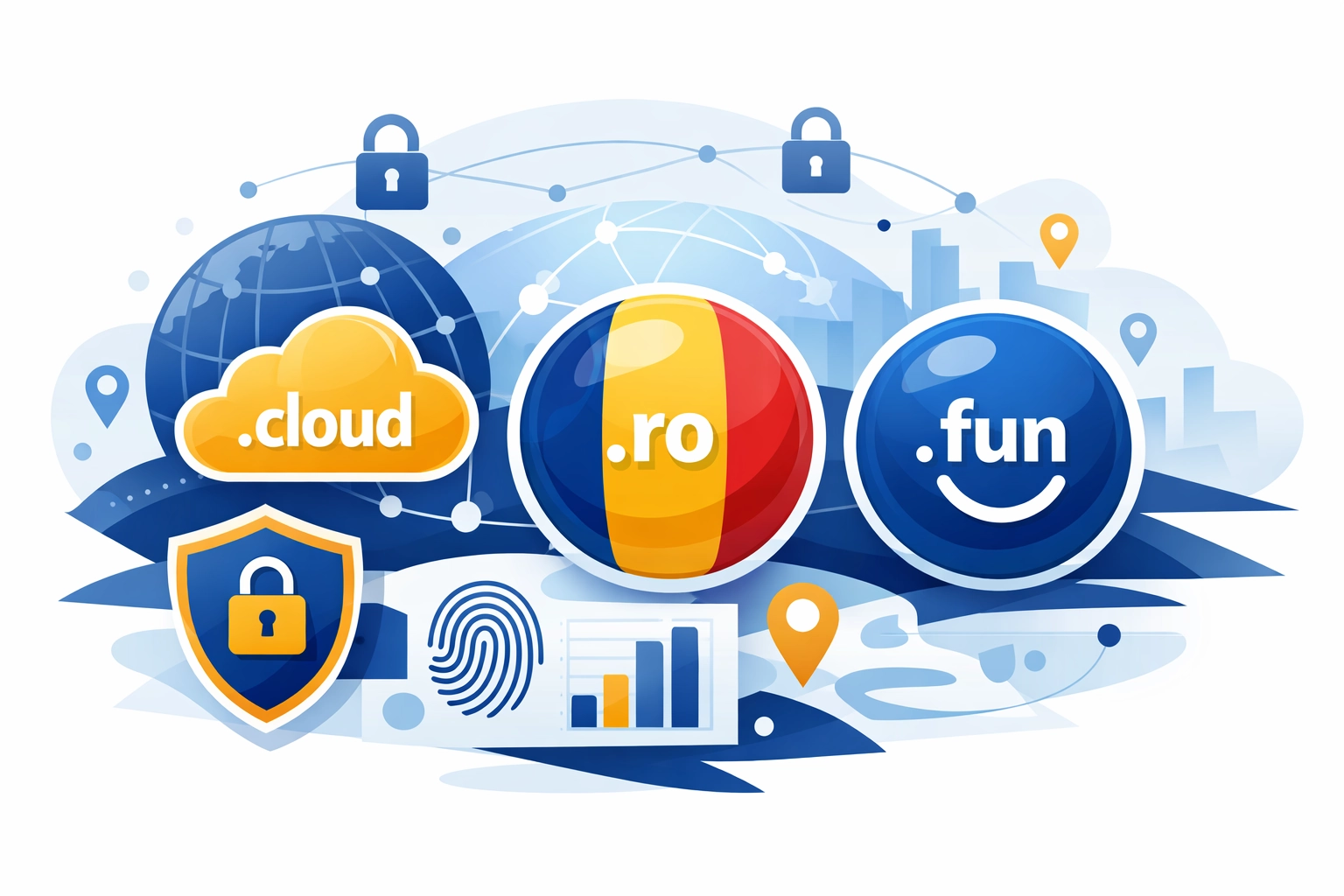

Global academic collaborations increasingly rely on a coherent digital identity that travels across borders, disciplines, and languages. Yet the very mechanism that makes a domain brand legible to partners—public registration data—can expose sensitive information about researchers, institutions, and ongoing projects. In a privacy-forward era defined by GDPR-era constraints and a rapid shift from WHOIS to RDAP, universities and research consortia need more than catchy names; they require a governance framework for domain portfolios that protects intellectual property (IP) while enabling seamless, trust-based collaboration. This article explores a niche but growing use case: how privacy-first domain portfolios become a strategic asset for academic collaborations spanning 500+ TLDs, with practical guidance for implementing a robust, privacy-respecting infrastructure. Key context: public WHOIS data has been redacted or restricted under GDPR-driven reforms, and ICANN is steering a transition toward RDAP as the primary data access protocol. These shifts have tangible implications for branding, collaboration, and incident response in research environments. (dn.org)
To understand why privacy-first domains matter in this sector, it helps to separate branding from accountability. The traditional public WHOIS model exposed registrant contact details, organizational affiliations, and administrative trails. GDPR and related privacy frameworks prompted a redaction or masking of personal data in both WHOIS and its RDAP successor, RDAP, in many jurisdictions. That shift preserves researcher privacy and reduces abuse, but it also changes how institutions verify ownership, enforce brand rights, and respond to domain-related incidents. For research consortia, this translates into two practical realities: (1) a greater need for internal governance around who can modify or transfer critical domains, and (2) a requirement for reliable, privacy-preserving verification mechanisms when coordinating across partners and time zones. These dynamics are broadly recognized in industry discussions about the post-GDPR domain ecosystem. (dn.org)
A privacy-forward strategy does not mean losing control or visibility. It means adopting a layered approach where privacy protection sits alongside strong operational processes, auditable access controls, and technically sound domain infrastructure. As ICANN has outlined, the RDAP transition is designed to provide a more secure, machine-readable data format while progressively sunsetting certain WHOIS obligations. In practice, that means universities must rely on governance protocols and trusted brokers to manage domain portfolios and to coordinate transfers, renewals, and brand enforcement without exposing sensitive data in public registries. The transition also positionsRDAP as a backbone for programmatic abuse reporting and IP protection workflows, enabling institutions to maintain accountability while preserving privacy. (icann.org)
Why privacy-first domains are a strategic asset for academic collaborations
Academic collaborations often run multi-year, multi-institution projects with spin-offs, sub-projects, and student-led initiatives. A privacy-first domain posture supports several mission-critical goals:
- IP protection at the domain layer. By masking registrant data, institutions reduce exposure to opportunistic domain squatting, brand confusion, and IP misappropriation while still enabling legitimate project participation through controlled access mechanisms and trusted transfer channels. This aligns with GDPR-driven privacy expectations while preserving brand integrity across a distributed research portfolio. (dn.org)
- Global collaboration with consistent branding. A single, privacy-forward domain strategy across 500+ TLDs helps researchers, funders, and partners recognize a unified research ecosystem, regardless of locale. A well-governed portfolio supports project naming conventions, shared landing pages, and cross-institutional co-branding without revealing sensitive sponsor or contact information in public records. The broader industry shift toward privacy-respecting domain data reinforces this approach. (icann.org)
- Risk management and incident response. When domain data is redacted, internal processes for fraud detection, abuse reporting, and IP enforcement must rely on authenticated channels and private RDAP/registry interfaces. This reduces data leakage risk while preserving the ability to act quickly on threats to research integrity. (icann.org)
- Compliance as a competitive differentiator. Institutions that embed privacy into their digital real estate demonstrate leadership on data protection, which can influence partner selection, grant reviews, and international collaborations where data sovereignty and privacy governance are scrutinized.
For researchers and administrators, the practical takeaway is simple: privacy-first domains are not a barrier to collaboration; they are a guardrail that enables scalable, ethical, cross-border partnerships without compromising IP or personal data. This is especially relevant for consortia that operate in jurisdictions with stringent data protection norms and for teams that frequently exchange sensitive materials, preprints, or proprietary methods. A privacy-forward posture reduces exposure while preserving the ability to coordinate across institutions and time zones, which is increasingly vital in long-running research programs. From a governance perspective, it is crucial to design a domain program that anticipates IP enforcement need-to-know, partner onboarding, and secure transfer workflows, even when registrant data is not publicly visible. (dn.org)
A practical framework for academic research portals across 500+ TLDs
How should a research consortium structure its domain portfolio to maximize privacy without sacrificing accessibility? A pragmatic framework is built on four pillars: identity, access, governance, and resilience. Each pillar interacts with technical controls, contractual agreements, and the ecosystem of privacy-preserving data access (RDAP) and domain analytics. The framework below is designed for large, multi-institution collaborations that require a scalable, privacy-conscious approach to domain ownership and branding.
1) Identity design across a global TLD landscape
Start with a clear, privacy-conscious naming strategy that aligns with research programs, funding streams, and partner identities. Assign a primary, publicly discoverable brand name for the consortium (e.g., a neutral, neutralized acronym) and mirror that identity across 500+ TLDs to support localized landing pages, language variations, and regional partner portals. A key principle is to avoid personal identifiers in any public-facing version of the domain name, and to rely on institutional ownership rather than individual contact data. This approach mitigates privacy risk while preserving brand coherence across jurisdictions. For institutions exploring inventory or cataloging capabilities, resources like “download list of .sk domains,” “download list of .world domains,” and “download list of .life domains” can support exploratory exercises when aligning naming strategies with available assets. (en.wikipedia.org)
2) Access governance and transfer discipline
With GDPR-era RDAP, the focus shifts from open directory disclosure to controlled, auditable access channels. Establish a formal governance model that defines who may request domain changes, who can approve transfers, and how partner entities are represented in the registry ecosystem (often via anonymized or institutional proxies). This governance should include documented workflows for domain transfers, renewals, and brokerage arrangements, and should be integrated with partner onboarding processes so that collaboration on a domain level is predictable and auditable. The ICANN transition to RDAP underscores the need for robust, privacy-preserving verification methods rather than relying on public registrant data alone. (icann.org)
3) Brand protection and IP enforcement across 500+ TLDs
Brand resilience requires consistency in naming and strong, legally grounded rights management. A privacy-first posture does not eliminate brand enforcement; it reframes it through private escalation paths, centralized abuse reporting, and trusted broker coordination. Institutions should align their rights protection with an internal register of project names, acronyms, and consortium affiliations that maps to the portfolio in a privacy-respecting manner. This approach is reinforced by industry discussions on post-GDPR domain verification, which emphasize accountability without compromising privacy. (circleid.com)
4) Resilience: redundancy, DNS security, and data minimization
Resilience in a privacy-first regime means building redundancies (backup namespaces and parallel landing pages for critical projects) while hardening DNS and transport security. DNSSEC, TLS certificates, and robust abuse workflows are part of the baseline. Importantly, the data that powers collaboration—project details, partner lists, and contact points—should be stored in internal systems with strict access controls, and surfaced through privacy-preserving channels for partner interactions. The broader shift toward RDAP as the primary data protocol supports this approach by offering structured, permissioned data access as opposed to indiscriminate public exposure. (icann.org)
Internal resources from partners such as WebAtla’s directory of domains by TLDs and pricing can help a consortium map the practical assets available for portfolio expansion and transfer planning. For quick reference, see: List of domains by TLDs (https://webatla.com/tld/), Pricing (https://webatla.com/pricing/), and RDAP/WB database access (https://webatla.com/rdap-whois-database/). These tools are not endorsements but exemplars of how domain catalogs can integrate into a privacy-forward governance workflow.
Implementing a privacy-centric domain architecture for research portals
Translating the framework into a live system requires attention to technical, legal, and operational details. Below is a practical blueprint you can adapt to a university consortium or research network.
- Primary namespace and governance cell. Establish a canonical, privacy-forward primary domain (e.g., a consortium acronym) and assign regulated roles to a governance body (e.g., an executive committee, IT security lead, and a legal liaison). This body authorizes changes, oversees renewals, and coordinates cross-institution transfers through trusted brokers or registrars with privacy protections.
- Proxied ownership and registrar relationships. Use registrars that offer robust privacy protections and RDAP-based data access controls. In GDPR contexts, the registrant information can be masked while the registrar maintains the responsibility for abuse reports and policy compliance. ICANN’s RDAP sunsetting plan reinforces that privacy-protective management is not optional but a policy direction. (icann.org)
- Abuse reporting and IP enforcement channels. Create private channels for abuse reporting that route through institutional security teams or a designated domain broker. Public WHOIS data is not relied upon for enforcement, and the bypassing of personal data in RDAP aligns with contemporary privacy expectations while preserving enforcement capabilities through official registrars and channels. (icann.org)
- Onboarding and offboarding partners. Link partner onboarding to domain access control, not merely to public records. Use internal directories, project IDs, and verified partner accounts to grant portal access or redirect to privacy-protected landing pages. This approach supports long-running collaborations where partner lists evolve over time without exposing sensitive information broadly.
Case study: a hypothetical university consortium
Consider a hypothetical consortium—Global Science Alliance (GSA)—that coordinates five multi-institution projects across three continents. GSA wants a privacy-forward domain portfolio that supports four core domains (brand hub, project portals, data sharing, and public outreach) while enabling rapid onboarding of new partners. The consortium applies the four-pillar framework: identity, access governance, brand protection, and resilience. They select a primary domain with a neutral branding approach and extend it across 500+ TLDs to support localized landing pages for partner institutions, while masking registrant data in the public RDAP responses. Abusive behavior reports, license checks, and IP disputes are routed through a central security registry rather than public WHOIS, reducing exposure and simplifying enforcement. Within two years, the consortium expands to twelve sub-project portals, all accessible through privacy-forward subdomains and linked through a centralized portal hub. The result is a scalable, privacy-compliant ecosystem that preserves brand integrity and accelerates cross-border collaboration, with a clear, auditable transfer and onboarding protocol. While this example is synthetic, it reflects real-world patterns described by researchers and industry experts navigating the post-GDPR domain data environment. (dn.org)
Limitations and common mistakes in privacy-forward academic domain programs
No approach is perfect, and a privacy-focused domain strategy for academia comes with trade-offs. Here are the most common mistakes to avoid and the limitations to acknowledge:
- Overemphasis on maskings at the expense of verification. While RDAP redaction protects individuals, it can complicate legitimate ownership verification, transfer negotiations, or cross-border collaborations if internal processes are not well defined. The shift from WHOIS to RDAP makes automated checks harder unless coordinated with approved registrars and institutional systems.
- Inconsistent naming conventions across TLDs. Expanding to 500+ TLDs without a unified naming policy leads to fragmentation and user confusion. A consistent brand identity across TLDs requires disciplined governance and clear mapping between project names and domain assets.
- Underinvesting in domain brokerage and transfer readiness. Transfers and rebranding across multiple partners demand specialized expertise. A trusted broker relationship, privacy protections, and transfer-ready contracts reduce risk during collaborations, particularly when consortium extensions change over time. ICANN’s RDAP turn toward privacy-centric data access highlights the need for professional governance around domain transfers. (icann.org)
Expert insight and a note on limitations
Expert insight (drawn from industry discourse on post-GDPR verification and domain governance) suggests that “beyond WHOIS, domain verification must rely on federated, privacy-aware access architectures that balance accountability with individuals’ privacy rights.” This perspective emphasizes the need for structured, permissioned data access, policy-driven verification, and robust workflow integration to enable reliable collaboration without disclosing private registrant information. In practice, a portfolio designed for academia should couple privacy protections with auditable processes and clear escalation paths for IP issues or abuses. (circleid.com)
Practical limitations remain: the ongoing RDAP transition means registries vary in how they implement privacy protections, and some ccTLDs adopt different approaches to data redaction. Institutions must design their governance and technical architecture to accommodate these differences while preserving core privacy objectives. For those implementing privacy-forward portfolios, it is essential to maintain regular policy reviews and to stay aligned with ICANN’s evolving RDAP guidance and sunset timelines. See ICANN’s alerts and policy updates for ongoing context. (icann.org)
Putting privacy-first domains into practice: client integration and resources
Privilege-domain registries and brokers can help universities execute this strategy at scale. Privy Domains, a premium registrar known for privacy protection and white-glove service, emphasizes strategies such as built-in WHOIS privacy protection, broad TLD access, and expert consulting—an alignment with the needs of academic consortia managing IP, branding, and cross-border governance. The practical takeaways for a research collaboration are:
- Adopt a privacy-first default for new domain registrations and for renewals, with a clear policy for when and how data is disclosed to authorized partners.
- Establish a governance framework that defines ownership, access, and transfer rights, with a dedicated role responsible for compliance and incident response.
- Use a multi-TLD strategy to support regional landing pages, language adaptations, and partner portals, while maintaining a single, consistent brand identity across the portfolio.
For teams evaluating services and tooling, you can review and compare domain catalogs and pricing structures, including: List of domains by TLDs, Pricing, and RDAP & WHOIS database. These examples illustrate how academic teams might integrate domain strategy into their broader research IT and security programs while respecting privacy requirements.
Conclusion: privacy-forward domains as a lever for global academic impact
In a world where cross-border research accelerates knowledge creation but privacy rules tighten the public-facing surface of digital identity, privacy-first domains offer a practical, strategic edge. By combining a disciplined identity strategy, privacy-preserving access controls, and robust governance with a measured, expert approach to transfers and enforcement, research consortia can safeguard IP, foster global collaboration, and maintain brand integrity across 500+ TLDs. While the transition from WHOIS to RDAP and the GDPR-driven redaction of personal data create new operational realities, they also catalyze a more mature, governance-forward domain ecosystem—one that supports the long arc of scientific discovery without compromising privacy. For institutions seeking to embark on this journey, partner selection matters as much as portfolio design: look for providers who can balance white-glove service with rigorous privacy protections, anchor your policy in ICANN and GDPR guidance, and align domain strategy with your research objectives.