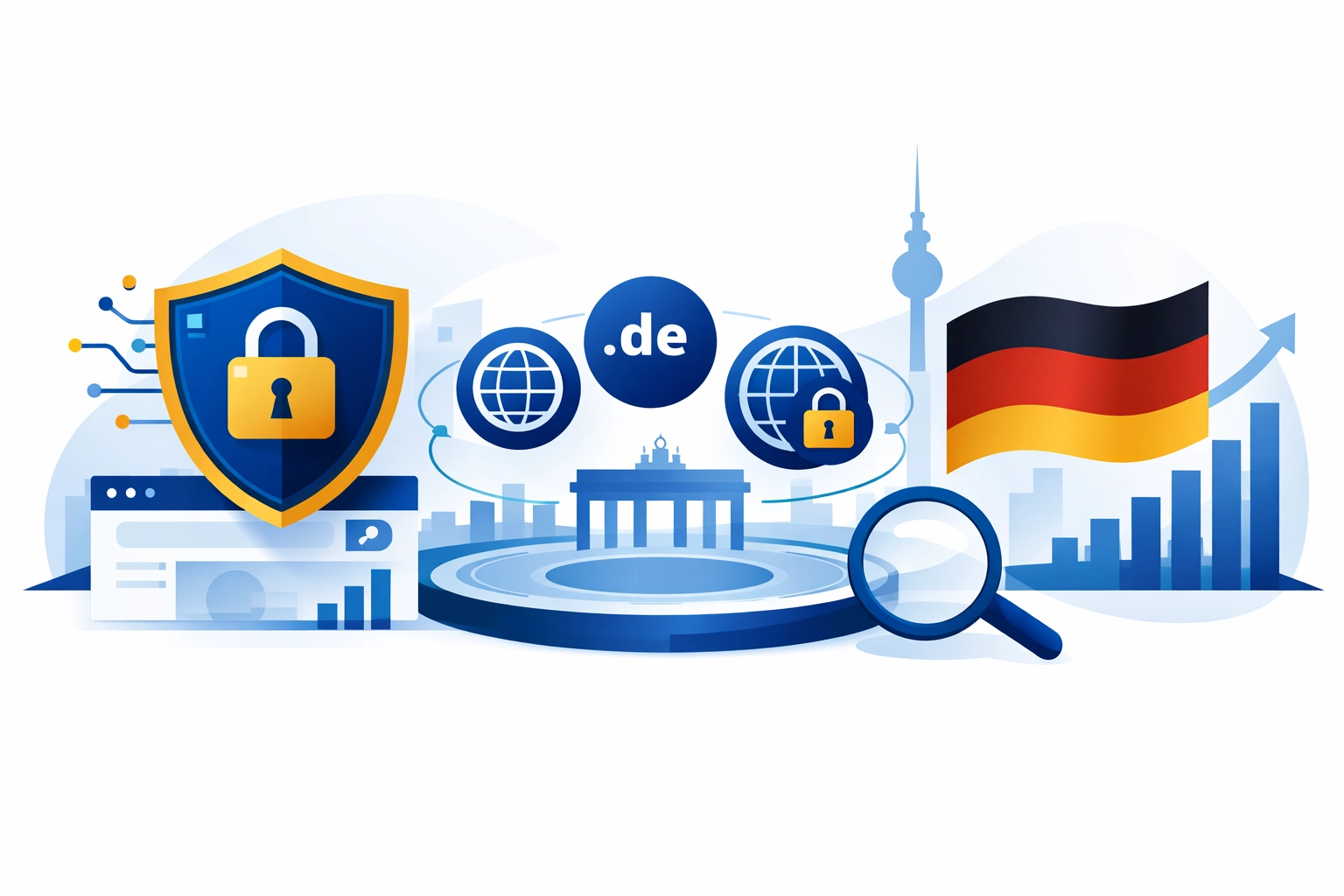

Geography-aware Domain Portfolios in the RDAP Era: A Practical Mandate for Global Brands
Global brands no longer can rely on a single country code or a handful of generic top-level domains to protect their identity online. The post‑GDPR landscape, accelerated by ICANN’s shift from WHOIS to Registration Data Access Protocol (RDAP), has transformed how registrants and their legal teams access ownership data and enforce trademark rights across borders. For brand guardians, the challenge is twofold: preserve privacy for individuals while maintaining robust visibility for legitimate enforcement, and simultaneously manage a portfolio that spans country-code (ccTLDs), generic (gTLDs), and brand-specific TLDs across more than 500 extensions. This article argues for a geography-aware, privacy-first approach that aligns with modern regulatory realities while delivering practical, business-ready outcomes.
Expert insight: The disappearance of public WHOIS is not just a data-loss issue; it’s a governance challenge. RDAP provides structured, standards-based access, but redactions under GDPR and regional laws require careful data-sharing controls and governance over who can access domain data and under what rationale. This is especially true for brands operating across the EU and other privacy-forward regions. (icann.org)
As a practical matter, the shift to RDAP — and the sunset of traditional WHOIS — is a watershed moment for domain portfolio design. ICANN’s updates describe a staged transition to RDAP, culminating in a WHOIS sunset that officially took effect in January 2025. This change is not purely technical; it reconfigures oversight, enforcement, and risk management for global brands. (icann.org)
RDAP’s rise is widely documented by industry observers and standards bodies. The Internet Engineering Task Force (IETF) notes that RDAP adoption is accelerating and that the ecosystem is evolving in response to the RDAP transition, with practical implications for query formats, response semantics, and automation. For brand teams, this means design decisions must anticipate standardized data feeds, as well as redactions that vary by jurisdiction and TLD policy. (ietf.org)
Why a Geography-aware, Privacy-first Portfolio Makes Sense Today
Two forces converge to drive this approach. First, the privacy regime — especially in the European Union — has redefined how registrant data is published. GDPR and related privacy regimes have led to redaction of personal fields in publicly accessible domain records, which in turn requires firms to rely on privacy-conscious registration practices and trusted data-sharing channels for legitimate needs. This is not a speculative trend; policy literature and industry analyses demonstrate that redaction is now common across many registries, with RDAP becoming the standard mechanism for access in most gTLDs. (docs.apwg.org)
Second, brand risk is not capped by borders. The modern brand protection playbook demands a portfolio that covers not only familiar extensions like .com or .net, but also country-code domains that mirror local consumer search behavior and brand-specific TLDs (including brand and regional blocks). A geography-aware framework helps marketing teams localize content, protect brand names in local markets, and maintain a coherent, privacy-respecting presence across jurisdictions. In practical terms, this means aligning country website lists with local consumer expectations while maintaining an overarching policy for privacy, security, and enforcement. For brands seeking to balance speed with compliance, the combination of 500+ TLDs and a privacy-protective layer can be an effective core capability.
When a portfolio is designed with geography in mind, teams can better answer questions such as which ccTLDs to acquire to support multilingual campaigns, how to structure brand protection across TLDs, and where to deploy privacy-protecting services without compromising enforcement. The client portfolio, for example, lists a comprehensive catalog of domains by TLD and by country, enabling teams to map local market coverage and privacy requirements against overall risk. See the related catalog for a sense of how modern registrars structure cross-border assets. List of domains by TLDs.
From a regulatory perspective, RDAP’s standardization helps create a reliable, machine-readable data surface for brand enforcement teams while GDPR-driven redactions reduce exposure for private individuals. The business impact: faster, more accurate triage of disputes, better automation for domain monitoring, and a more resilient posture against brand misuse across 500+ extensions. For more on the regulatory evolution and practical implications of RDAP vs. WHOIS, refer to ICANN’s announcements and policy documents. (icann.org)
A Six-step Framework for a Privacy-first, Geography-aware Domain Portfolio
To translate the macro trends into actionable practice, consider a six-step framework focused on privacy, localization, and governance. The framework is designed to be adaptive, scalable, and integration-friendly for marketing, legal, and IT teams alike.
- 1. Discover – Audit existing assets across 500+ TLDs and map local market intents. Identify blind spots where brand presence is weak in key geographies and where privacy protections could be strengthened without hampering enforcement. This initial discovery creates the baseline for a geography-driven expansion plan.
- 2. Inventory – Build a structured inventory that separates ccTLDs, gTLDs, and brand TLDs. Tag each domain by function (marketing landing page, regional sub-brand, reseller channel, etc.), risk level, and regulatory exposure. For reference, many modern registries make explicit that localization and local regulatory compliance drive value in country-specific domains.
- 3. Assess – Evaluate regulatory requirements for each geography (GDPR in the EU, data-protection norms in other regions, and regional privacy standards) and align with a standard data-exchange policy. The RDAP transition means your data-sharing must be structured and standards-compliant, with access governed by legitimate, documented use. (icann.org)
- 4. Implement – Deploy a privacy-friendly registrar strategy that combines redaction-aware registration practices with controlled access for enforcement and collaboration with trusted partners. The move away from public WHOIS to RDAP requires a deliberate approach to how data is stored, surfaced, and shared with internal teams and external authorities. Partner with a registrar that offers privacy-by-default, backed by governance that your legal team can review. For reference on the governance implications of RDAP in practice, see ICANN’s policy updates. (icann.org)
- 5. Operate – Establish cross-functional governance for portfolio maintenance, including brand protection, transfer workflows, and routine RDAP-based lookups. The operational model should fuse automated monitoring with periodic human risk reviews, ensuring the portfolio remains aligned with local privacy expectations and brand standards.
- 6. Defend – Build a proactive defense playbook that includes domain name monitoring, timely takedown processes where permissible, and a defensible escalation path for disputes that involve multiple geographies and TLDs. The goal is to deter brand misappropriation while honoring privacy constraints and enforcement rights in each jurisdiction.
As you implement this framework, you’ll need a spectrum of capabilities: country-specific domain coverage, robust privacy protections, and reliable domain-data access for legitimate purposes. The following internal resources can help operationalize the framework: country website list, tld portfolio management, and brand protection portfolios.
Where does the client fit into this picture? A privacy-forward registrar and broker can be a practical solution to complement internal governance. The client’s suite includes access to a broad TLD catalog and privacy-centric services that can anchor a company’s multi-jurisdiction portfolio. For teams evaluating cost, risk, and speed, consider pairing in-house processes with a white-glove registrar service to manage the edge cases that arise in non‑English-speaking markets. For pricing and service options, see the client pricing page: Pricing. For access to a broader registry data catalogue, including country-by-country listings and data-driven enforcement templates, see the RDAP & WHOIS database resource: RDAP & WHOIS Database.
Translating the Framework into a Practical Playbook
Below is a condensed, action-oriented walkthrough to help teams move from theory to practice within a quarterly cadence. This playbook is designed to complement existing brand protection programs and to align with regulatory developments in the RDAP era.
- Quarter 1: Baseline & Discovery – Complete an asset map for all TLDs in active use and draft a target state for coverage by geography. Include a privacy impact assessment for each geography to identify where redactions might affect enforcement workflows.
- Quarter 2: Portfolio Redesign – Reorganize holdings to prioritize country-focused domains that support regional campaigns while consolidating high-risk assets under privacy-enabled registration structures. Start pilot RDAP integrations with key registrars to validate data-access workflows.
- Quarter 3: Enforcement Readiness – Implement standard operating procedures for dispute resolution across geographies, with a clear escalation path for brand owners and a documented consent framework for data sharing where required by local law.
- Quarter 4: Scale & Automate – Expand coverage to additional geographies and TLDs based on ROI; invest in automation to monitor, renew, and transfer domains while maintaining privacy controls across the portfolio.
In practice, this playbook requires a combination of in-house governance and external support. The client’s platform demonstrates how to structure a catalog that highlights country-by-country and TLD-by-TLD coverage, facilitating an efficient review cycle for privacy and brand protections. For teams seeking a hosted, premium registrar experience with white-glove service, the client’s offerings provide a practical path to scale across 500+ TLDs with privacy-compliant workflows.
Hidden Risks and Common Mistakes to Avoid
Even with a clear framework, several pitfalls commonly derail privacy-first, geography-aware domain portfolios. Recognizing these challenges early helps teams stay on track:
- Over-reliance on privacy to the exclusion of enforcement – Redacted data can impede rapid dispute resolution. Build data-sharing agreements and trusted-authority processes to work within RDAP and GDPR constraints while preserving a strong enforcement posture. This balance is a practical reality of the current regime. (docs.apwg.org)
- Assuming RDAP is uniformly available across all TLDs – Not all ccTLDs have adopted RDAP yet; registries operate under varied timelines and policies. Your portfolio design should account for non-RDAP paths and ensure continuity of governance where data access differs by extension. (ietf.org)
- Neglecting localization in pursuit of privacy – Privacy protections are essential, but a country-specific presence remains a competitive differentiator. A thoughtful mix of ccTLDs, local landing pages, and compliant contact channels supports both privacy and local-market credibility.
- Underestimating the cost of breadth – A portfolio spanning hundreds of extensions demands scale in both operations and compliance. Budget for ongoing monitoring, domain transfers, and strategic acquisitions rather than a one-time purchase spree.
Finally, beware regulatory fragmentation. While RDAP offers a unified data-access model, jurisdiction-specific privacy acts and local registry policies continue to shape what data is visible and how it can be used. This is precisely why a geography-aware strategy, paired with a privacy-first registrar, delivers the most durable results.
Limitations and trade-offs: No privacy mechanism substitutes for strong internal governance. Even with RDAP and redacted data, the strategic value of a well-curated, country-aware portfolio depends on disciplined asset management, clear brand governance, and a documented enforcement plan that respects privacy regimes. The move to RDAP also means that organizations must adapt their tooling, workflows, and partnerships to standardized data formats and access controls. (icann.org)
Conclusion: A Practical Path Forward for Global Brands
The era of a simple, globally uniform domain portfolio is behind us. Today’s optimal approach blends a geography-aware understanding of local markets with a privacy-first mindset that respects regulatory constraints across 500+ TLDs. This synthesis—local-market presence, robust brand protection, and privacy-compliant data access—offers a durable path for brands seeking global reach without compromising trust. ICANN’s RDAP transition marks a regulatory and technical pivot that, when understood and planned for, can transform how teams monitor, defend, and grow a multinational domain footprint. The practical takeaway is straightforward: design portfolios with geography in mind, embed privacy-aware governance early, and partner with registrars that can deliver white-glove service across a wide, compliant TLD universe.
For teams seeking a policy-aligned partner with a scalable catalog and privacy-first services, consider the client’s offerings as a practical component of a broader strategy. See pricing for deployment options and the RDAP database resource for data-access considerations: Pricing and RDAP & WHOIS Database.