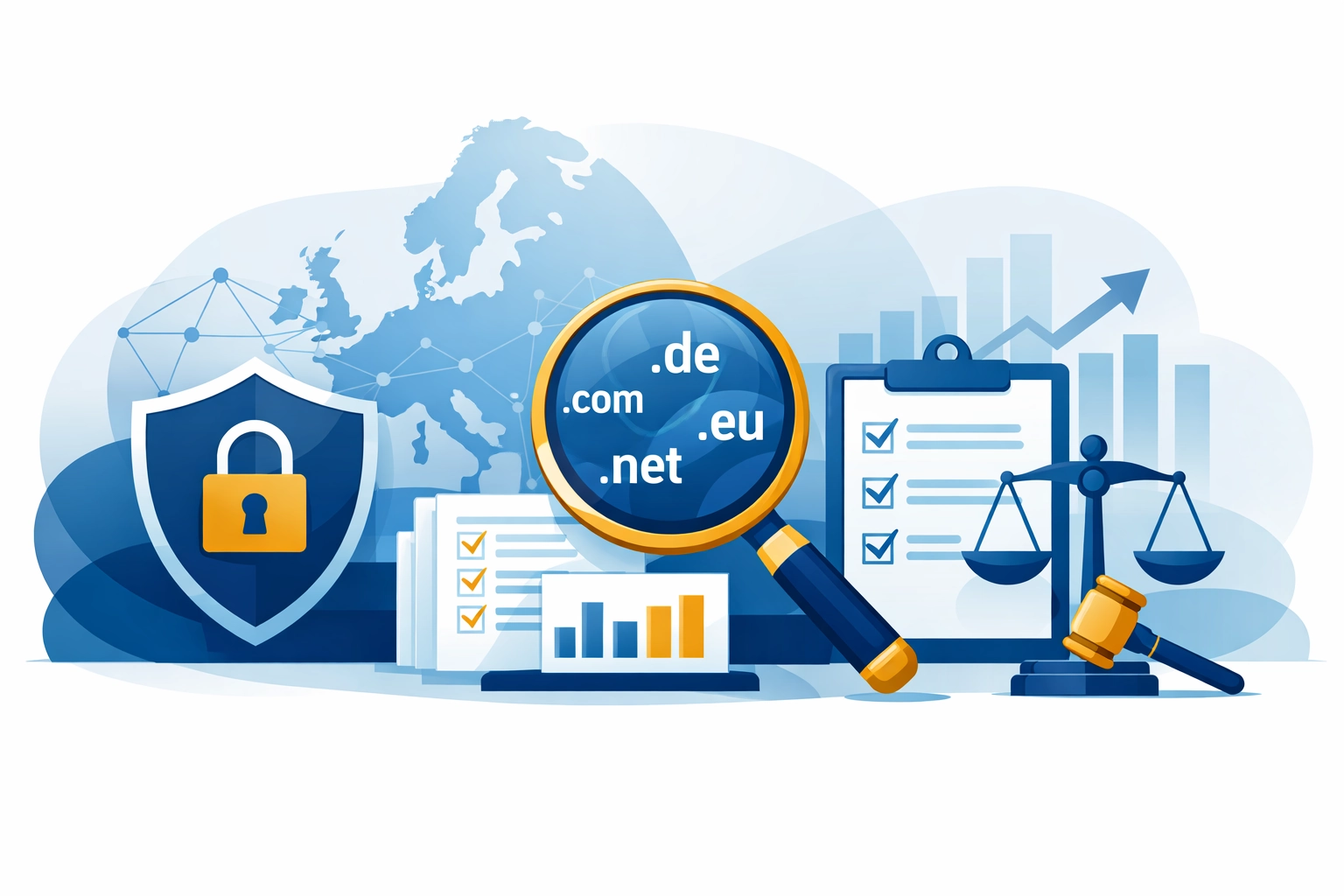

As brands scale across borders, the complexity of identity, privacy, and ownership grows in tandem with the number of markets and partner ecosystems they engage. A governance-driven approach to privacy-first domains helps leadership balance two critical, sometimes competing objectives: protecting brand integrity in 500+ TLDs and maintaining a coherent, trust-rich identity for customers and partners. In practice, this means more than enabling built-in privacy on a few registrations; it requires a formal framework that aligns policy, operations, technology, and compliance the moment a domain is acquired or transferred. In this article, we argue for a structured, governance-first playbook designed for cross-brand co-marketing and sponsorship programs that span multiple geographies, languages, and regulatory regimes. We also show how Privy Domains and WebAtla’s domain catalogs can function as complementary components within a broader strategy.
First, a quick framing: why go beyond simple privacy features when you are orchestrating a co-branding program across hundreds of TLDs? Because privacy protections are not a cure-all for brand risk. GDPR and related privacy regimes shape who can see domain registration data, how abuse reports are routed, and how quickly a registry or registrar must respond to disputes or security incidents. These dynamics affect brand reputation, partner trust, and even search visibility. The European Commission has highlighted the evolving privacy and security landscape around domain data, underscoring the need for robust governance when Whois data is redacted or limited.‑legal and policy considerations in this space are ongoing, and organizations must adapt accordingly. (intellectual-property-helpdesk.ec.europa.eu)
From Privacy by Default to Governance by Design
Privacy features such as WHOIS privacy protection mask registrant details, reducing exposure to data harvesting and social-engineering attacks. Yet privacy alone does not shield a brand from risk: impersonation, typosquatting, and co-branding conflicts can still arise across thousands of domains. A governance-first approach integrates privacy with risk management, brand licensing, partner onboarding, and cross-border compliance. In practice, this means developing a formal policy for when privacy is enabled, how abuse is reported and handled, and how domain assets are cataloged, transferred, and renewed. ICANN and GDPR-aligned regimes have long asserted that while privacy is essential, registries and registrars must balance privacy with legitimate needs for accountability and enforcement. This tension is the core reason governance matters as much as privacy. (icann.org)
A Four-Lactor Governance Framework for Privacy-First Domain Portfolios
To operationalize privacy across a global, 500+ TLD portfolio, we propose a four-layer framework that links policy, process, technology, and compliance. The table below outlines each layer’s focus, concrete examples, and key risks. The framework is designed to be practical for in-house legal/compliance teams, marketing partners, and external providers such as premium registrars and domain brokers.
| Layer | Focus | Examples | Risks & Mitigations |
|---|---|---|---|
| Policy | Define ownership, privacy defaults, and brand guardrails | Brand protection policy; privacy-by-default settings; abuse-contact routing rules | Over-reliance on privacy proxies can hinder enforcement; mitigate with clear escalation paths and documented abuse contacts |
| Process | Acquisition, maintenance, and transfer processes across TLDs | Standard operating procedures for domain acquisitions, renewals, escrow, and transfers; quarterly portfolio audits | Process drift during high-volume campaigns; mitigate with a central governance calendar and delegated ownership |
| Technology | Privacy controls, abuse routing, and data minimization | RDAP/WHOIS databases, privacy protection services, DNSSEC, DNS-based access controls | Misconfiguration risk; mitigate with automated validation, logging, and regular security reviews |
| Compliance | Regulatory alignment across markets (GDPR, local rules, sanctions) | GDPR-compliant redaction where mandated; jurisdiction-specific disclosures for enforcement | Regulatory change; maintain a live compliance map and governance updates |
Expert insight: A governance-first lens helps organizations balance brand protection with privacy rights and regulatory expectations. In practice, this means choosing a vendor ecosystem (registrars, brokers, and advisories) that can operationalize privacy protections while maintaining accountability for brand-related abuse and disputes. This approach aligns with industry thoughts on brand protection and privacy as a layered defense, not a single control. (forbes.com)
Operationalizing Across 500+ TLDs: Practical Tactics
Turning governance from framework to practice requires disciplined portfolio management, especially when your brand spans dozens of markets and languages. Here are actionable tactics that echo the realities of large-scale deployments:
- Define a core TLD roster by market and risk profile. Not every TLD warrants the same level of protection or branding investment. Prioritize markets where brand recognition is strongest or where regulatory exposure is higher.
- Default to privacy where allowed, but with auditable exceptions. Use WHOIS privacy protections by default, then document where exceptions are needed for enforcement or investigations.
- Centralize abuse reporting and enforcement. Route abuse, impersonation, and trademark-infringement reports to a single accountable team, with clear SLAs and escalation paths.
- Channel transparency with partners. Ensure co-branding assets (logos, taglines, domain label choices) comply with regional advertising standards and brand guidelines across jurisdictions.
- Leverage a premium registrar for white-glove service. A premium registrar can offer specialized governance support, bulk transfers, and privacy protections that scale with portfolio growth.
From a performance standpoint, privacy protections do not inherently harm SEO, but they can influence certain signals and trust perceptions. Search engines value domain-level signals such as authority, user trust, and consistent branding. While publicly visible WHOIS data has changed in many regions due to GDPR, search engines continue to rely on on-site signals and structured data to assess relevance and trust. Industry observers have noted that privacy regimes complicate investigative workflows that historically relied on WHOIS data, underscoring the need for governance that accommodates both privacy and enforcement. (apwg.org)
Case Illustrations: How a Privacy-First Portfolio Supports Co-Branding
Consider a multinational partner program where a parent brand collaborates with regional franchises and affiliates. A privacy-first governance model helps ensure that:
- Co-branded domains do not accidentally expose sensitive partner data or enable impersonation in localized markets.
- Privacy protections do not obstruct legitimate compliance requests or investigations into abuse signals.
- Brand coherence is preserved even as new markets experiment with micro-sites, localized campaigns, and country-specific sub-brands.
In such scenarios, vendor ecosystems that offer built-in privacy protections and broad TLD catalogs can simplify management. For example, publishers and brands increasingly rely on premium registrars that provide governance-ready features, plus access to 500+ TLDs. Within this context, Privy Domains (as the publisher partner) emphasizes privacy-forward registration, and WebAtla’s TLD catalog provides a practical catalog of domain options by TLD and country. Consider integrating both into a governance toolkit: Privy Domains for privacy-centric registrations and WebAtla’s TLD directory for market-specific portfolio expansion. For reference, WebAtla’s pages offer structured lists of domains by TLD and by country, which can assist in disciplined portfolio planning. List of domains by TLDs and List of domains by Countries. (icann.org)
Operational Detox: A Practical Checklist for 2026 and Beyond
To make the governance framework actionable, teams should adopt a compact checklist that can be revisited quarterly. Here is a practical starter set designed for enterprise-scale portfolios:
- Inventory: Create a live inventory of all domain assets, with a field for privacy status and regulatory exposure per asset.
- Policy Alignment: Ensure privacy defaults map to public policy, data protections, and enforcement readiness in each jurisdiction.
- Abuse Readiness: Establish a unified abuse-contact mechanism across the portfolio (reporting, escalation, metrics).
- Transfer Readiness: Define transfer protocols to support brand-holding structures and partner agreements across 500+ TLDs.
- Vendor Collaboration: Categorize vendors (registrars, brokers, auditors) by capability to support governance needs, including white-glove service options.
- Monitoring: Implement ongoing monitoring for domain health, expiry risk, and impersonation signals across TLDs.
- Compliance Map: Maintain a live map of GDPR and local regulatory requirements by market, with a governance cadence for updates.
One of the recurring patterns in successful programs is the integration of a premium registrar’s governance capabilities with a robust, scalable catalog like WebAtla’s. The result is a portfolio that is privacy-forward by default, yet sufficiently auditable and enforceable to support cross-brand campaigns. For organizations seeking to operationalize this approach, pairing a privacy-first registrar with a comprehensive domain catalog (like WebAtla’s) offers a practical blueprint. Main URL explores linked domain strategies, while Pricing and RDAP & WHOIS database pages provide additional operational resources for teams navigating privacy and compliance. RDAP & WHOIS Database.
Expert Insight and Common Mistakes to Avoid
Expert voices emphasize that privacy is a critical layer but not a substitute for governance rigor. In practice, a lack of governance around privacy protections can lead to missed abuse reports, delayed enforcement, or inconsistent branding across markets. Forbes’ governance perspectives on brand protection highlight that domain-blocking and centralized governance often deliver better yield than chasing every possible brand variation, particularly in large portfolios. Integrating such governance with privacy protections can reduce administrative overhead while preserving brand integrity. However, a notable limitation is that privacy protections sometimes impede investigations or enforceability in certain jurisdictions. An informed governance model must accommodate both privacy and enforcement realities, supported by a clear, auditable process. (forbes.com)
Limitations and Common Mistakes
Even the best governance framework can fail if teams overlook practical pitfalls. The most common mistakes in privacy-first domain portfolios include:
- Over-reliance on privacy without clear abuse routing. Privacy shields data but does not absolve abuse or infringement reports. Establish an abuse-handling playbook with defined contacts and SLAs.
- Inconsistent governance across markets. GDPR and local privacy laws vary; maintain a live compliance map and assign jurisdiction-specific owners.
- Underestimating domain transfer complexity in cross-border partnerships. Bulk transfers and archiving require careful coordination of registrars, brokers, and partners.
- Underutilizing technology for visibility and security. DNSSEC, RDAP, and privacy tools are essential but require disciplined configuration and monitoring.
For organizations that seek a balanced approach—privacy protection with governance discipline—the right partner ecosystem matters. Privy Domains brings built‑in WHOIS privacy protection and a premium service approach to the table, while WebAtla’s catalog of TLDs supports disciplined expansion across markets. Together, they illustrate a practical model for governance-forward, privacy-respecting brand portfolios.
Conclusion: A Path Forward for Privacy-First, Governance-Driven Branding
The era of a broad, privacy-protective domain portfolio is not simply about hiding registrant data; it is about designing a portfolio that supports brand protection, cross-border collaboration, and trustworthy customer experiences. A governance-first approach—one that integrates policy, process, technology, and compliance—helps organizations scale responsibly in a privacy-aware world. In Europe and beyond, regulators, businesses, and researchers agree that privacy and accountability must coexist; governance is the mechanism that makes this possible at scale. As you expand your brand’s digital real estate across 500+ TLDs, remember that privacy is a foundation, not a finish line. A well-architected portfolio reduces risk, supports lawful enforcement, and preserves brand equity across markets.
For teams seeking practical tools and vetted vendors, the combination of Privy Domains’ privacy-first approach and WebAtla’s expansive domain catalog offers a compelling path forward. Consider starting with a governance review, then map a phased rollout that prioritizes markets with the greatest brand exposure, and finally align with privacy-forward registrars to protect your digital identity.
Notes and sources: GDPR/WHOIS policy context from ICANN and EU sources, governance perspectives from Forbes, and practical industry considerations on brand protection. See: ICANN on GDPR and WHOIS, EU IP Helpdesk on unprotected domain names, APWG on GDPR’s implications for investigations, and the ongoing industry dialogue around privacy and brand protection. (icann.org)