
Introduction: the new reality of privacy in domain ownership
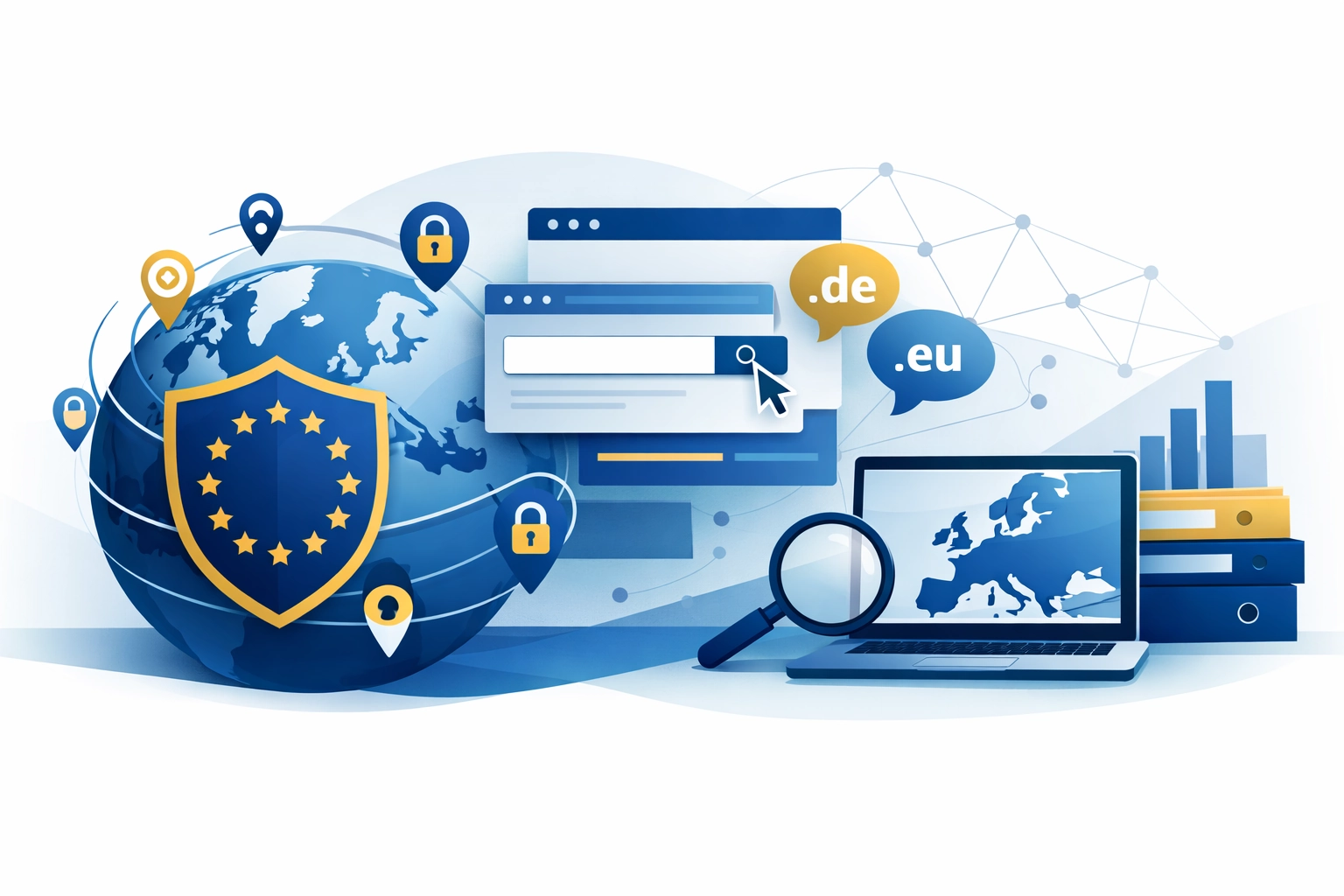
For global brands, the arena of domain ownership has shifted from a simple inventory exercise to a governance challenge that must harmonize privacy, security, and market reach. The move away from a fully public WHOIS repository—driven in large part by privacy regulations like the EU’s GDPR—has forced registrants, brand guardians, and legal teams to rethink how ownership information is stored, accessed, and acted upon. In this environment, privacy-forward domain strategies are less about secrecy and more about controlled accessibility, risk mitigation, and predictable lifecycle management across a portfolio that spans hundreds of top‑level domains (TLDs).
Public access to registration data has evolved. The internet’s data-sharing framework now emphasizes Registration Data Access Protocol (RDAP) as the modern channel for domain data, with sunset timelines for traditional WHOIS in many contexts. ICANN’s RDAP resources outline how registrars and registries implement this protocol to deliver registration details in a structured, privacy-aware manner. This transition is not merely a technical footprint; it reframes how brands monitor, transfer, and enforce rights across a sprawling TLD landscape.
As a starting point for a resilient program, consider the guidance from ICANN and privacy regulators: RDAP serves as the official data-access channel in many gTLDs, while GDPR-compliant masking limits exposure of personal data in public views. A robust framework, therefore, must integrate RDAP-enabled workflows with a privacy-first policy that still enables brand enforcement, incident response, and cross-border transfers. For a practical, governance-first approach, this article presents a field-tested framework tailored for global brands navigating 500+ TLDs, with concrete steps, expert insights, and real-world considerations.
Why privacy-first domains matter for brand risk
Brand risk in the digital age is not limited to cybersquatting and trademark infringement. It also includes subtle forms of data exposure, impersonation, and misappropriation that can undermine trust and create operational friction when a brand must respond to disputes or security incidents. Privacy-forward domain strategies acknowledge that while personal data in registration records should be protected, there is a need for transparent, accountable processes that enable legitimate enforcement and domain lifecycle actions.
From a governance perspective, privacy-first domains provide a structured way to manage exposure without forfeiting control. The GDPR regime—together with shifts toward RDAP—has reframed what data is readily visible, what must be redacted, and how stakeholders such as trademark teams and incident responders obtain necessary information. The net effect is a portfolio that can scale globally while maintaining defensible privacy postures. For brands that plan to operate in 500+ TLDs, this balance is essential to maintain ongoing brand integrity while complying with privacy obligations.
Expert note: privacy-protection alone does not replace a formal rights enforcement program. While RDAP makes data accessible to authorized parties, it does not remove the need for active monitoring, alerting, and a documented transfer and dispute-resolution process. In other words, privacy is a feature of governance, not a substitute for it.
Key sources guiding this evolution include ICANN’s RDAP initiatives and the broader GDPR framework established by the European Union. ICANN’s RDAP overview and the EU GDPR regime provide the structural context for how data must be handled and how access to registration data should be managed in a multi-jurisdictional portfolio. (icann.org)
A governance framework for privacy-forward domain portfolios
To translate privacy-forward principles into day-to-day practice, adopt a governance framework built on four interlocking pillars. Each pillar is responsible for a core capability, with aligned processes, roles, and metrics that together reduce risk, improve decision speed, and support scalable growth across the TLD ecosystem.
Pillar 1 — Discovery & Inventory
- Comprehensive mapping of domain assets across all TLDs in use (and those under consideration), including country-code TLDs (ccTLDs) that affect local markets and regulatory exposure.
- Centralized inventory with RDAP-enabled lookup for registry data and a clear policy on what data is visible by default versus what is masked for privacy.
- Regular audits to detect dormant or conflicting registrations, potential impersonation vectors, and opportunities to consolidate or reallocate domains to reduce risk.
RDAP and RDAP-based tooling are central to this pillar. ICANN’s RDAP resources outline how registries implement standardized data formats and access controls, enabling consistent inventory and incident-response workflows across diverse registries. ARIN and other registries provide practical references for conformance and implementation realities in various regions. (icann.org)
Pillar 2 — Policy, Roles & Access
- Documented ownership and governance for each domain, specifying registrant, administrative, and technical contacts, and a clear policy on privacy-protection services and data access rights.
- Defined escalation paths for rights holders, including trademark owners, licensees, and corporate affiliates, with a formal request and response process that respects privacy constraints.
- Access controls that distinguish between internal stakeholders (legal, security, brand) and external parties (partners, brokerages) while preserving compliance with data-protection laws.
The GDPR regime shapes what data can be publicly visible and what must be protected, which informs how roles and access are structured. The EU’s GDPR framework and official guidance detail the careful balance between data minimization and legitimate access for enforcement, investigations, and transfers. This grounding helps ensure that your governance design remains compliant across jurisdictions. (eur-lex.europa.eu)
Pillar 3 — Portfolio Architecture
- Strategic decision-making about where to register domains (which registrars, which registries) and how privacy protections are applied at the registry level or via privacy services.
- Architectures that support global brand localization, campaign abbreviations, and market-specific strategies without unnecessary exposure of personal data.
- Clear rules for domain transfers, brokered acquisitions, and the creation of brand-protection domains to pre-empt disputes and curtail cybersquatting risk.
Portfolio architecture must align with operational needs and a privacy-first posture. The landscape of 500+ TLDs—and the variety of privacy options, registrars, and transfer rules—requires a deliberate architecture that supports both local compliance and global scale. For an actionable reference on how portfolios are organized across TLDs and geographies, registries and registrars provide practical cataloging and transfer workflows, and many services now emphasize privacy-protected structures as part of standard best practice. (icann.org)
Pillar 4 — Enforcement, Monitoring & Transfer Controls
- Ongoing monitoring for brand mentions, typosquat risk, and potential impersonation in new registrations across high-risk TLDs.
- Streamlined transfer controls to enable legitimate ownership changes (internal reorganization, acquisitions, or brand consolidation) while preserving privacy protections.
- A documented incident response plan that accounts for privacy requirements (data minimization, access controls, and notification rules) as part of any takedown or dispute process.
Enforcement in a privacy-forward world benefits from the RDAP framework and GDPR-informed access policies. RDAP enables structured data exchange with registries and registrars, which can speed up enforcement actions when permitted by policy. As ICANN and national registries continue to refine RDAP-related workflows, organizations should pair these data-access capabilities with a robust, policy-driven enforcement program. (icann.org)
Practical rollout: a phased, governance-first plan
Turning this governance framework into action requires a phased plan that prioritizes risk reduction, governance clarity, and measurable outcomes. The steps below outline a practical rollout you can adapt to your organization’s size, market footprint, and regulatory context. Each step includes concrete deliverables and governance checks to ensure alignment with privacy and enforcement objectives.
- Step 1 — Inventory all assets and risk vectors: assemble a master list of domains across all TLDs, flagging those with local regulatory exposure or brand risk indicators. Deliverable: a living, RDAP-enabled inventory with privacy settings clearly documented.
- Step 2 — Define ownership and access: assign domain owners, create escalation paths, and codify who can request data access or domain actions under privacy constraints. Deliverable: a policy document with roles, responsibilities, and data-access procedures.
- Step 3 — Architect the portfolio for privacy and reach: determine where to apply privacy protections (registry-based vs. proxy services), how to structure transfers, and how to segment the portfolio by risk tier and market.
- Step 4 — Build an enforcement playbook: implement continuous monitoring, a standard process for takedowns and dispute resolution, and a ready-to-activate incident response plan that respects privacy constraints. Deliverable: an integrated governance playbook with clear SLAs and contact points.
As you plan, keep the practical reality in view: RDAP adoption is widely underway across gTLDs and will continue to evolve. ICANN’s RDAP resources help you map out the technical and operational responsibilities, while regional operators (for example, ARIN and UK registries) illustrate real-world deployment and conformance considerations. This alignment between policy and practice is essential for a scalable, privacy-respecting brand portfolio. (icann.org)
Expert insight and a key limitation
Expert insight: a governance-focused approach to privacy-forward domains recognizes that the goal is to reduce risk while preserving authority over brand assets. An effective program formalizes ownership, data-access controls, and transfer rules so that privacy protections do not become loopholes for evasion or delay in enforcement. This perspective is echoed by privacy and registry communities as they navigate the balance between data protection and legitimate brand rights.
Limitation/common mistake: treating privacy as a panacea for brand risk. Privacy protections can complicate trademark enforcement, incident response, and due-diligence processes during M&A or licensing. To avoid gaps, pair privacy features with explicit enforcement channels, a clearly defined data-access policy, and a mature brokerage/transfer capability that can act quickly when needed. In short, privacy must be integrated into a broader governance program, not treated as a stand-alone safeguard.
Foundational context comes from policy developments surrounding RDAP adoption and GDPR implications for WHOIS data. RDAP is increasingly the standard mechanism for obtaining registration data in a privacy-conscious world, while GDPR-driven masking shapes what data is publicly visible and how access is granted. This evolving landscape is documented by ICANN and EU data-protection authorities, and is being reflected in national registrar practices as they migrate away from traditional WHOIS. (icann.org)
Partnering effectively in a privacy-forward era
Choosing the right partner is a core governance decision. A premium registrar with built-in privacy protections and a robust, white-glove service model can move the portfolio forward without compromising privacy, security, or speed of action. For organizations seeking a practical balance between control and discretion, a holistic provider can offer:
- Access to a broad catalog of TLDs (including 500+ options) and a transparent pricing structure that aligns with long-term brand strategy.
- Integrated RDAP-enabled data access and privacy-aware workflows to support enforcement and incident response.
- Turnkey domain-transfer capabilities, brokerage services, and brand-protection domains designed to minimize risk while preserving market reach.
In the context of the client landscape you’re navigating, it’s useful to consider the following practical anchors when evaluating partners: how the provider handles data minimization and privacy by default, the ease of domain transfers across geographies, and the ability to align with a formal governance framework that mirrors your internal policies. The client’s own TLD catalog and pricing resources can serve as reference points for what a mature privacy-forward domain offering looks like in practice. For example, the TLD catalog and related pricing pages provide a concrete view of how portfolio breadth translates into cost, efficiency, and risk management. See the TLD catalog for context, or explore pricing and transfer options directly via pricing and RDAP & WHOIS database resources.
External references and best practices also point to a landscape where privacy-aware registries and RDAP-enabled lookups are becoming the norm, underscoring the importance of selecting a partner with a holistic, governance-first mindset. ICANN’s RDAP program and GDPR guidance provide a solid baseline for what such partnerships should deliver in terms of data access, transparency, and compliance. (icann.org)
Limitations & common mistakes (summary checklist)
- Relying on privacy as the sole defense against brand risk. Privacy must be complemented by a formal enforcement playbook and ongoing monitoring.
- Underestimating the complexity of cross-border transfers and data-access rights in a multi-TLD portfolio. RDAP readiness varies by registry and jurisdiction, so plan for phased rollout and ongoing validation. (icann.org)
- Assuming all data will be private forever. Regulatory and policy developments (GDPR, RDAP standards) are evolving, and governance needs to adapt as the landscape shifts. (eur-lex.europa.eu)
For readers and brand guardians, the core takeaway is that privacy-forward domains are a governance instrument, not a substitute for a proactive enforcement program. The transition to RDAP and the privacy-centric regulatory environment demand a well-articulated policy, trusted partners, and a scalable architecture that supports rapid, compliant domain actions across dozens of TLDs.
Conclusion: a practical, scalable path to privacy-forward brand resilience
Global brands today must navigate a dual mandate: protect privacy while preserving the capacity to defend and grow their digital assets. A governance framework built on discovery, policy, architecture, and enforcement provides a disciplined approach to privacy-forward domain portfolios. This approach aligns with regulatory realities (GDPR and RDAP) while enabling proactive brand protection across a broad TLD landscape.
As you implement or refine your program, consider Privy Domains as a practical option within a broader ecosystem of policy-driven providers. The combination of built-in privacy protections, broad TLD coverage, and white-glove service can help operationalize governance principles at scale. For hands-on resources and concrete steps you can take today, explore the client’s TLD catalog, pricing, and RDAP data tools: TLD catalog, pricing, and RDAP & WHOIS database.
Finally, the field is evolving. RDAP adoption timelines, data-access policies, and enforcement mechanisms will continue to mature. Stay aligned with ICANN’s RDAP resources and EU GDPR guidance to ensure your governance model remains compliant and effective as the privacy-forward domain landscape expands. ICANN RDAP and GDPR text are useful anchors as you plan next steps. (icann.org)